
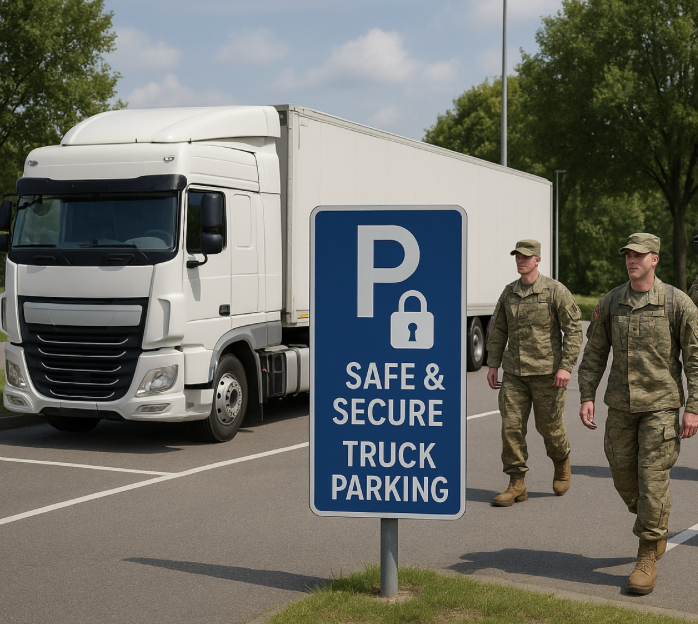
In the current increasingly unstable geopolitical situation, with an ongoing war in Europe, ESPORG organised (May 2025) a dedicated workshop on military mobility, with the participation of representatives from DG MOVE of the European Commission and NATO, to take stock of the ongoing policy initiatives and keep members informed about them.
In addition, on 12 June 2025, the EC opened a targeted consultation with the objective to identify key problem areas and address infrastructural and procedural barriers and capability gaps related to military mobility.
On 25 June, a new NATO defence spending commitment was agreed, which would see NATO member countries aiming, in time, to dedicate 3.5% of GDP to ‘core’ defence spending and an additional 1.5% on flanking infrastructure and digital resilience, making for a total of 5%. On 26 June, European Union member governments confirmed that EU countries should “coordinate among themselves the implementation of relevant commitments”.
ESPORG therefore took the issue seriously and participated in the EC consultation, placing the emphasis on the following key issues:
- A structured cooperation needs to be established between the public authorities, military and private road transport and infrastructure and parking operators, with the objective to create a trusted framework for the exchange of know-how, experience and support materials, including aligning standards and putting together basic training packages for civil mobility service providers, including safe and secure parkings, on the basic needs and procedures related to military mobility.
- The EU legislation must also be adapted to provide common definitions, framework and procedures to address issues during emergency situations, including for safe and secure parkings, which would be selected for military mobility (dual) use.
- The obvious negative cost-benefit ratio between private investment and military mobility obligations must also be addressed and public funds must be made available for private entrepreneurs, including for dual-use safe and secure parkings, to fully fill in the negative cost-benefit gap.
In its contribution, ESPORG raised also a number of other issues, such as:
- The need for a dedicated reflection, carried out by the relevant services of the European Commission and NATO, to map the existing capacities along the main military mobility corridors/areas.
- The need to create dedicated material for raising awareness and training for dual-use parking operators, possibly as part of the standard parking managers’ training package.
- The necessity for a general EU OMNIBUS regulation, to be proposed by the European Commission, to allow civil drivers and infrastructures to offer services under emergency circumstances but also to move between military and civilian use.
- The need to align standards applicable to military and civil mobility, whilst providing operators, including dual-use safe and secure parking operators, with the resources and time to adapt.
For ESPORG, infrastructure providers and in particular dual-use safe and secure truck parkings must be supported, including financially by dedicated funds, to align their standards for a potential military mobility dual-use, whilst offering them sufficient time to make sure they are ready on time, without making any financial loss.
ESPORG is ready and willing to work together with the representative private sector organisations, such as ESTA, the European association for the abnormal road transport and mobile crane rental industry, to consider voluntary standards for welcoming high-capacity vehicles at truck parkings.
Bearing in mind the strategic importance of the issue, ESPORG will keep its focus on military mobility, including by developing a strategy plan, to support its members and accompany future policies with support mechanisms, both funding and training, in the interest of its members and society as a whole.