
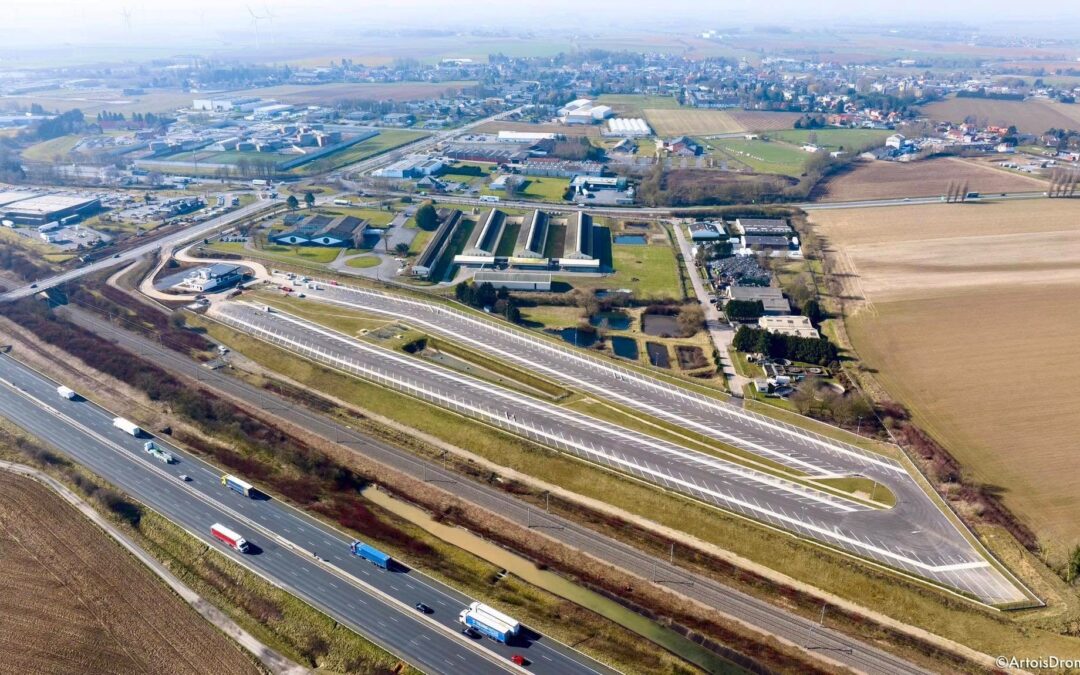
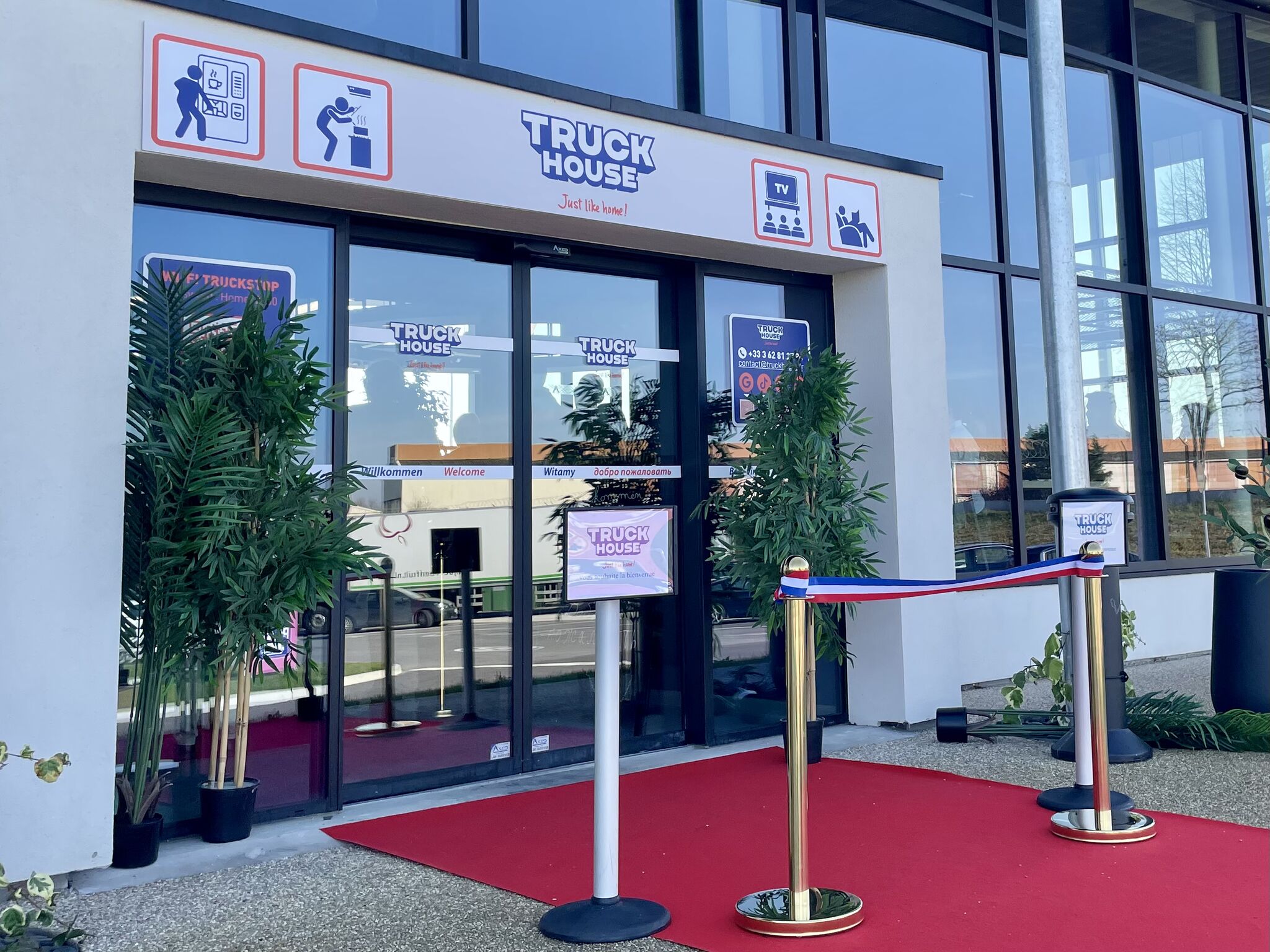
On Thursday 26 February 2026, Bapaume Truck House A1 officially opened its doors, adding a new state‑of‑the‑art Safe and Secure Parking Area to the French section of the North Sea–Mediterranean corridor.
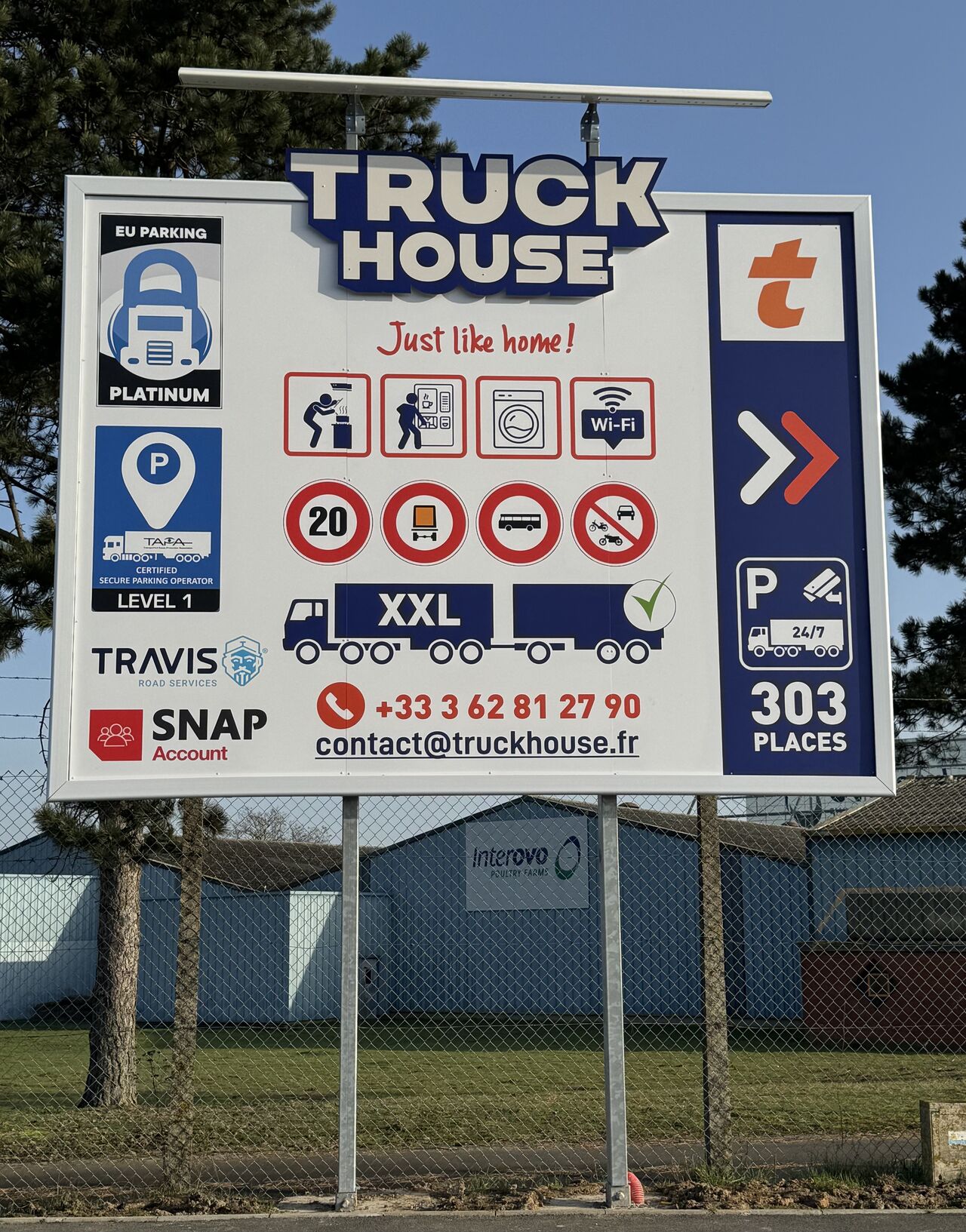
Strategically located near the junction of the A1, A2 and A26 motorways in Bapaume (Pas‑de‑Calais), the site offers a modern, automated complex entirely dedicated to the safety and well‑being of truck drivers, with 303 secure parking spaces and a wide range of comfort facilities. The project has been co‑funded by the European Union through the Connecting Europe Facility (CEF), which supports investments in safe and secure truck parking areas along the TEN‑T network, and has benefitted from ESPORG’s support through its deployment.
Bapaume Truck House A1 is designed as a true service hub, combining high levels of security for cargo with clean sanitary infrastructure, rest and relaxation amenities and services that enable a low‑emission, future‑proof road transport sector.
An opening event bringing together the French transport community
The opening event brought together a wide range of stakeholders from the French road transport ecosystem, including other parking operators, representatives of leading companies such as APRR from the Eiffage group, Engie and AS24, local authorities from the Bapaume commune and the Hauts-de-France region, as well as law-enforcement and emergency services, such as the local gendarmerie, the police and the fire brigade, underlining the shared responsibility for road safety and the protection of drivers and freight in and around the town.
The programme started with David Bray and Cyril Gardien, co‑founders and initiators of the project and operators of Transports Bray and Transports Gardien, who retraced how the idea of Bapaume Truck House A1 emerged from the concrete needs of drivers and transport operators. They emphasised the considerable effort required to turn this idea into a high‑quality SSPA, from early concept to EU‑funded application, construction and finalisation, and highlighted the importance of long‑term cooperation between private investors, public authorities and European programmes.
As a central moment of the ceremony, the founders presented a recognition award to Valeria Castillo Romero, acknowledging her key role in accompanying the project at every stage and to Marjorie Létoquart, responsible for the exploitation of the parking area. This gesture underlined how such kind of projects depend on committed partners who understand their complexity and dedicate fully to their deployment and realisation.
The event continued with a presentation by Thierry Roger, General Director of Truck House A1, who stressed the urgency of offering truck drivers safe, secure and clean service areas where they can rest with dignity and peace of mind. He presented his commitment to operating Bapaume Truck House A1 to the highest standards of security and service quality, and to actively integrating ESPORG’s Wellbeing Programme, which promotes a holistic approach to drivers’ physical, mental and social well‑being in the transport and logistics sector.
Thierry Roger then invited Mirjam Frakulla to introduce ESPORG’s work and the Wellbeing Programme in more detail, explaining how the initiative encourages parking operators and transport companies to implement concrete measures for healthier, safer and more attractive working and resting conditions for drivers.
The economic significance of the project was further underscored by Jean-Marc Devise, President of the CCI Artois. Speaking on behalf of the Chamber of Commerce and Industry, Mr. Devise pointed out the vital role the facility plays in the broader regional economy. He noted that the CCI Artois has been a proud partner in this venture, recognizing that robust logistics infrastructure is a magnet for further industrial investment.
Jean-Jacques Cottel, Mayor of Bapaume, concluded the meeting by highlighting the project’s alignment with the town’s urban and economic development goals. He emphasized that the Truck House is more than just a service station, it is an infrastructure commitment to safety and hospitality, which provides a structured, modern response to the needs of the transport sector while ensuring that our town remains at the forefront of logistical innovation. He ended his speech recognising the project as an investment in our local economy and a pleasant testament to the parking operators team ability to welcome all their guests at best.
ESPORG’s growing engagement in France
The inauguration of Bapaume Truck House A1 illustrates ESPORG’s growing engagement in France, one of the countries most affected by the structural deficit in safe and secure truck parking spaces in Europe.
Recently, France has been investing in both new facilities and upgrades of existing ones to better respond to drivers’ needs, and private investments like Truck House A1 are increasingly focused on expanding and improving the offer of certified SSPAs.
At the current stage we welcome 30 certified or certifiable parking sites in France among our members, and this network continues to grow as more operators choose to meet EU standards on safety, security and services.
Calling for continued public and EU support
Bapaume Truck House A1 also demonstrates how EU co‑funding can catalyse ambitious private initiatives and help close the persistent gap in safe and secure truck parking capacity. Across Europe, an estimated hundreds of thousands of truck parking spaces are still missing to meet demand, and France is among the most affected countries, which makes CEF support particularly relevant to unlock investment in high‑quality SSPAs.
ESPORG continues to strongly advocate for robust public investment frameworks and for the continuation and reinforcement of EU support, including under the future CEF 3, so that more projects like Bapaume Truck House A1 can be developed and upgraded to EU standards.
By promoting cooperation between public authorities, private operators and EU institutions, ESPORG aims to ensure that safe and secure truck parking areas are recognised and developed as essential service hubs that safeguard cargo, support drivers, enable the energy transition and contribute to Europe’s mobility and connectivity goals.