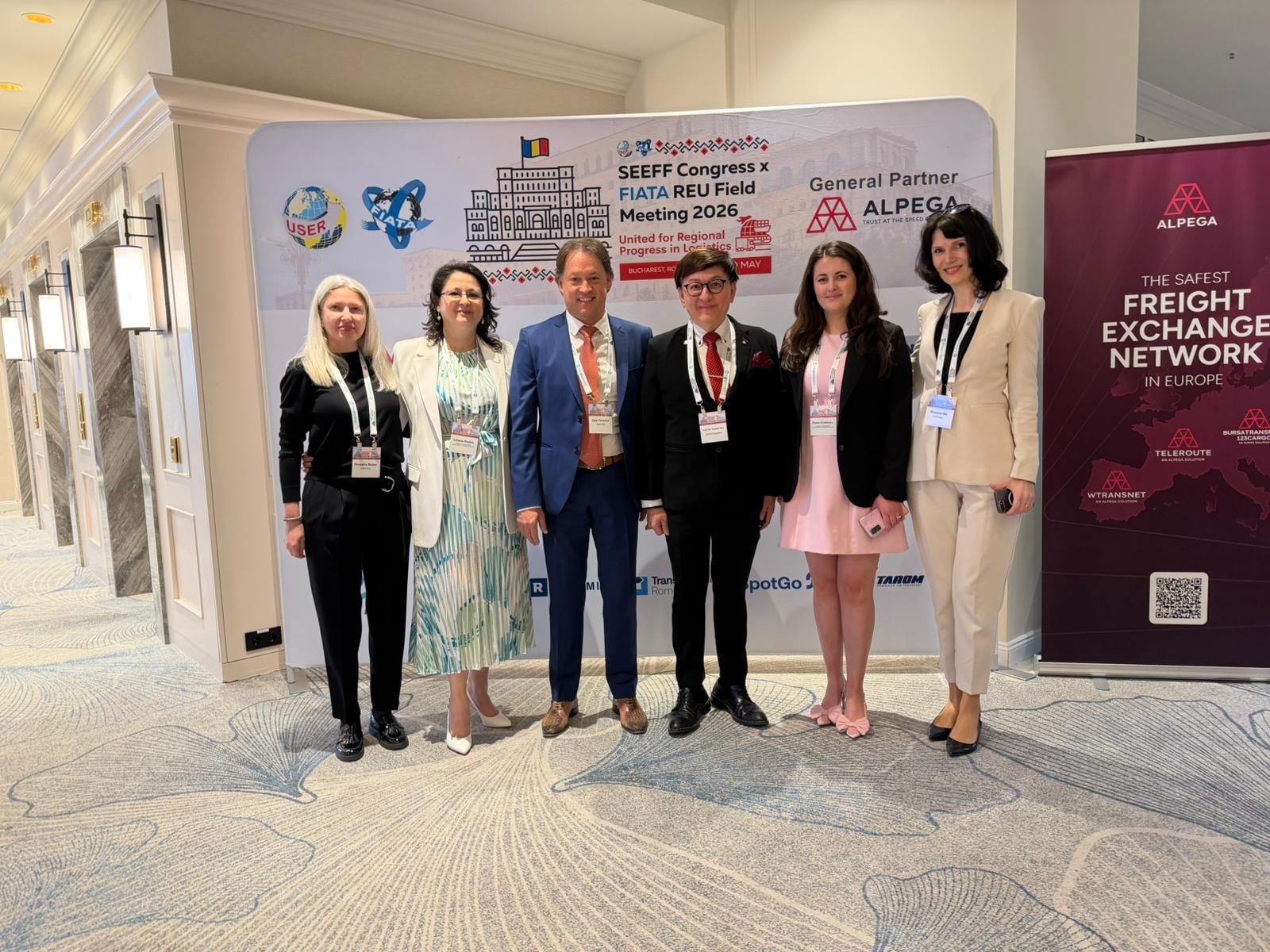
ESPORG participated in the SEEFF Congress & FIATA REU Field Meeting 2026, held from 18–20 May in Bucharest, Romania, under the theme “United for Regional Progress in Logistics.” The event brought together freight forwarders, logistics providers, policymakers, security experts and international industry associations to discuss the future of freight transport, supply chain resilience and regional cooperation.
Organised by the Romanian Freight Forwarders Association (USER) together with the South Eastern European Freight Forwarders Association (SEEFF) and FIATA, the congress welcomed more than 150 delegates from 22 countries and served as one of the key European logistics gatherings of the year.
Putting EU Parking Standard at the Centre of Supply Chain Security
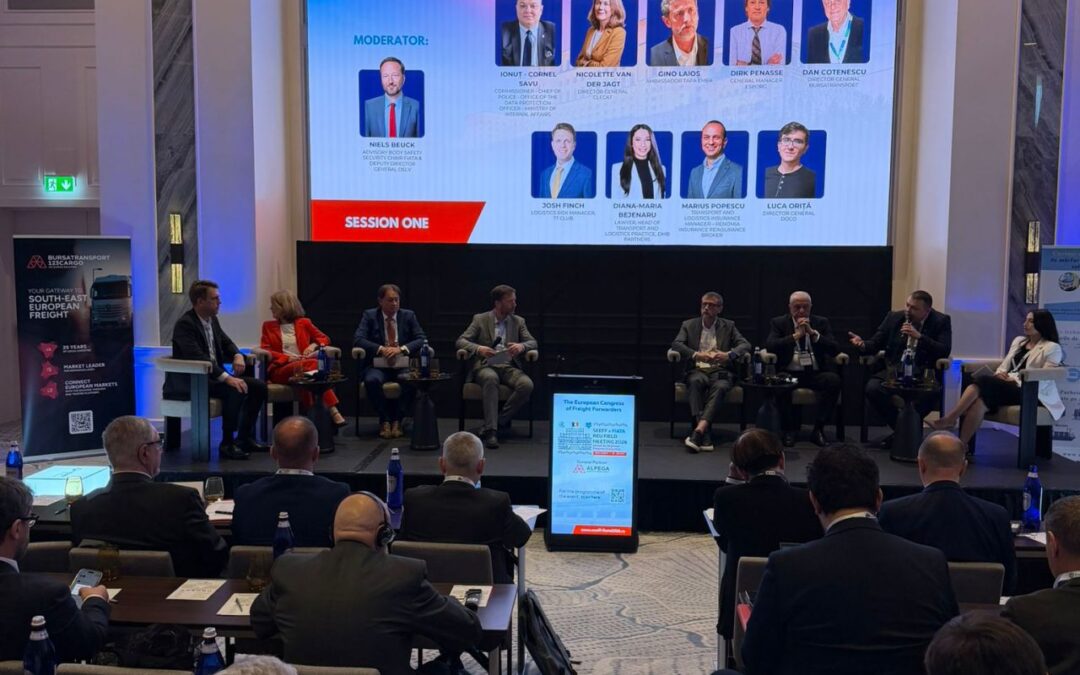
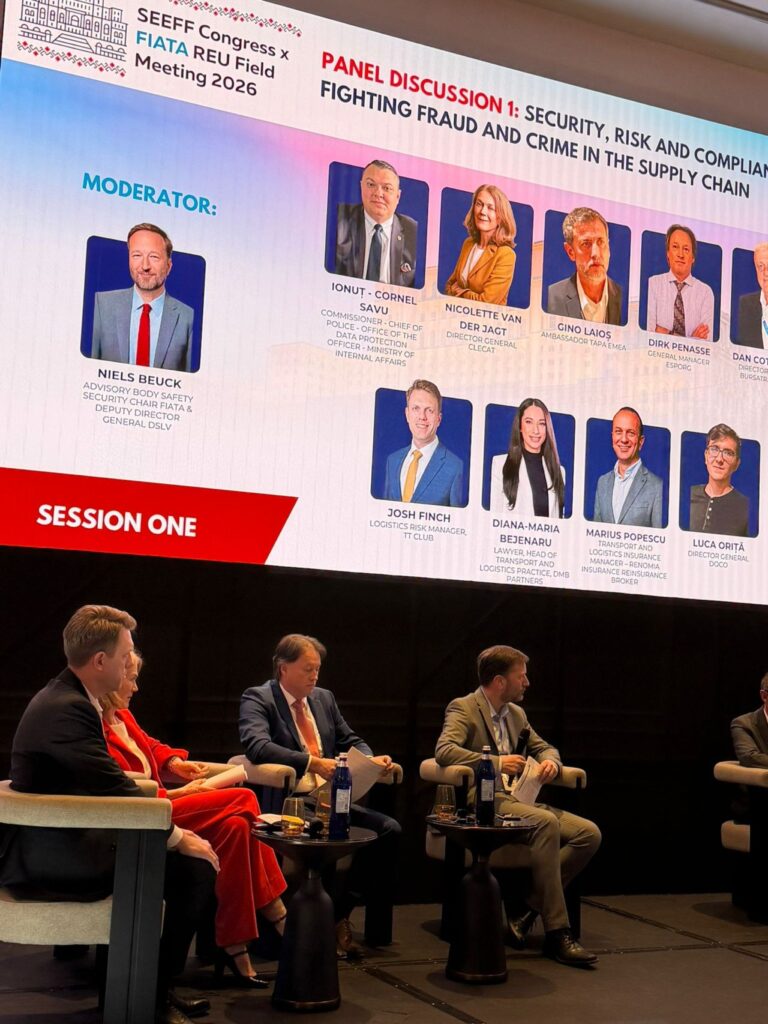
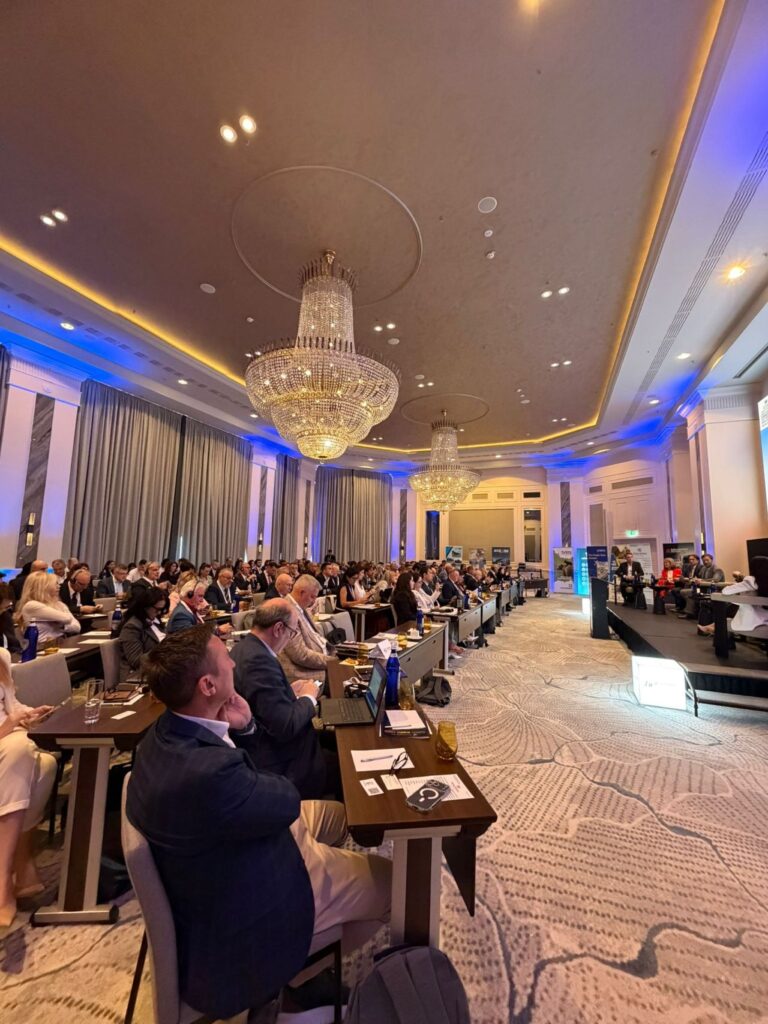
ESPORG General Manager Dirk Penasse participated in the opening day panel discussion on “Security, Risk and Compliance – Fighting Fraud and Crime in the Supply Chain,” alongside representatives from CLECAT, TAPA EMEA, TT Club, insurance specialists, legal experts and logistics industry leaders. The session focused on transportation fraud, cargo theft prevention, cybersecurity, due diligence systems, risk mitigation and the role of secure parking infrastructure in protecting freight operations.
During the discussion, Dirk Penasse highlighted the growing importance of Safe and Secure Truck Parking Areas (SSTPAs) certified according to the EU Parking Standard, explaining how they help freight forwarders reduce cargo theft risks, improve compliance and support driver wellbeing throughout the supply chain.
“The EU Parking Standard is the only legal standard at EU level, creating a common benchmark of security, service quality and trust for the entire logistics ecosystem — from drivers and hauliers to freight forwarders, shippers and insurers.”
The EU Parking Standard, established through Delegated Regulation (EU) 2022/1012, is unique because it is a legally binding framework established by the European Commission, covering both security requirements and driver services. Audit companies must be accredited by both the European Commission and at least one national accreditation body specifically for this standard
He underlined the distinction between the EU Parking Standard and industry-led parking labels, reinforcing the need for a common, legally recognised benchmark for security and service quality across Europe.
Why This Matters for Freight Forwarders
Several key messages emerged from the discussions that are highly relevant for freight forwarders and logistics operators:
- Cargo theft, carrier identity fraud and cybersecurity threats remain among the most significant risks facing supply chains today.
- The EU Parking Standard is increasingly recognised as a critical risk-mitigation tool for shippers, freight forwarders, insurers and transport operators.
- Secure parking infrastructure is becoming a strategic component of compliance with EU mobility, safety and driver welfare requirements.
- By 2040, approximately 500,000 overnight truck parking spaces will be needed across Europe, highlighting the urgency of accelerating investments in certified parking facilities.
- Countries such as France, Italy and Spain are already demonstrating how implementation of the EU Parking Standard can improve security levels and service quality for drivers.
ESPORG also reiterated its commitment to building a European ecosystem where hauliers, freight forwarders, shippers, insurers and drivers collectively recognise and adopt the EU Parking Standard as the reference framework for safe, secure and sustainable freight transport.
Strategic Dialogue with FIATA Leadership
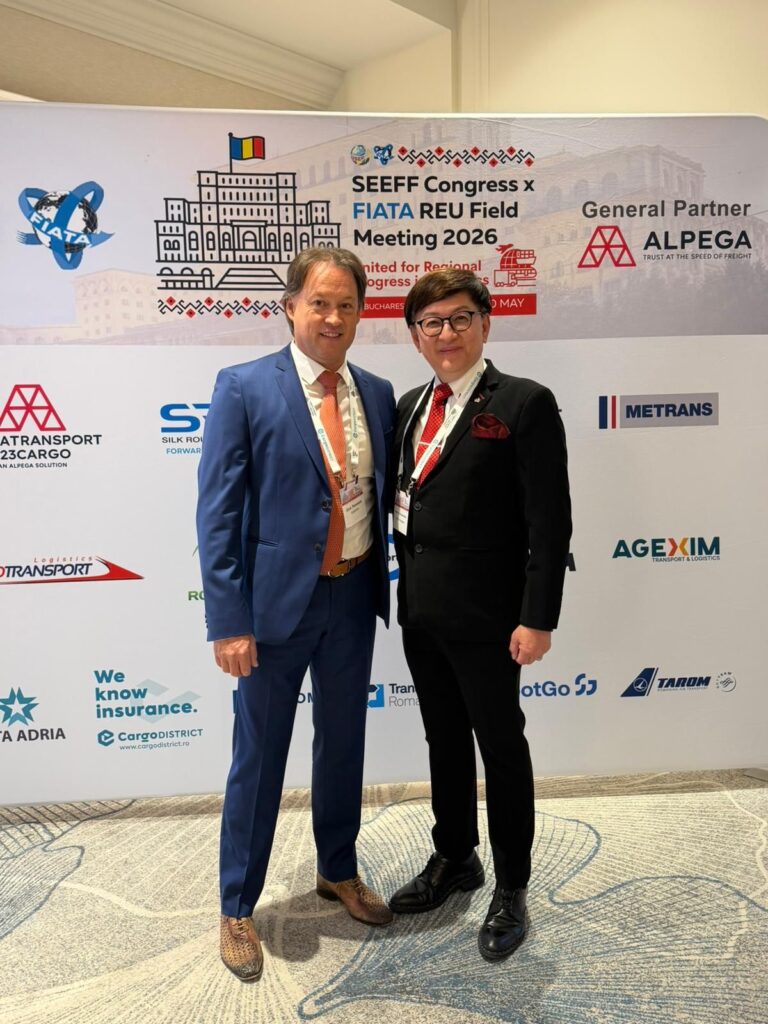
The congress also provided an opportunity for valuable exchanges between ESPORG and Prof. Dr. Thomas Sim, President of FIATA, on strengthening cooperation to support secure, resilient and sustainable freight transport across Europe and beyond.
The discussions reflected a shared understanding that freight transport security, driver wellbeing, infrastructure development and supply chain resilience must be addressed collectively by all stakeholders across the logistics ecosystem.
As FIATA celebrates its centenary in 2026 and continues to represent the global freight forwarding community, closer cooperation between freight forwarders and secure parking stakeholders is becoming increasingly important for addressing emerging security, regulatory and operational challenges.
A Congress Focused on the Future of Logistics
The first day of the congress set the tone for a comprehensive programme covering some of the most pressing issues facing the sector, including:
- Security, risk and compliance in supply chains;
- Development of intermodal transport corridors across Central and South-Eastern Europe;
- TEN-T corridor investments and regional connectivity;
- Digitalisation and new European regulations such as eFTI and the Mobility Package;
- Strategies to strengthen resilience and competitiveness in freight forwarding.
Thank You to USER, Wellbeing Ambassador in Romania
ESPORG extends its sincere thanks to Marius Cae, President of USER, Iuliana Badea, Secretary General of USER, and Diana Cristescu, Project Manager at USER, for the invitation and the excellent organisation of the congress.
ESPORG is proud to continue its collaboration with USER, which serves as an ambassador of the European Wellbeing Initiative in Romania, helping to promote safer and more sustainable conditions for professional drivers and the wider logistics community.
Together, we continue building a safer, more resilient and more connected European logistics ecosystem.