More than 4,500 participants gathered in Brussels for Connecting Europe Days 2026, the European Commission’s flagship transport event. Over three days, ESPORG combined high-level institutional meetings, speaking engagements and exchanges with TEN-T European Corridor Coordinators, while strengthening its cooperation with European authorities, members and new partners.
Connecting Europe Days opened with a call for a stronger European transport network
Connecting Europe Days 2026 brought together EU institutions, national authorities, infrastructure managers, transport organisations and industry in Brussels.
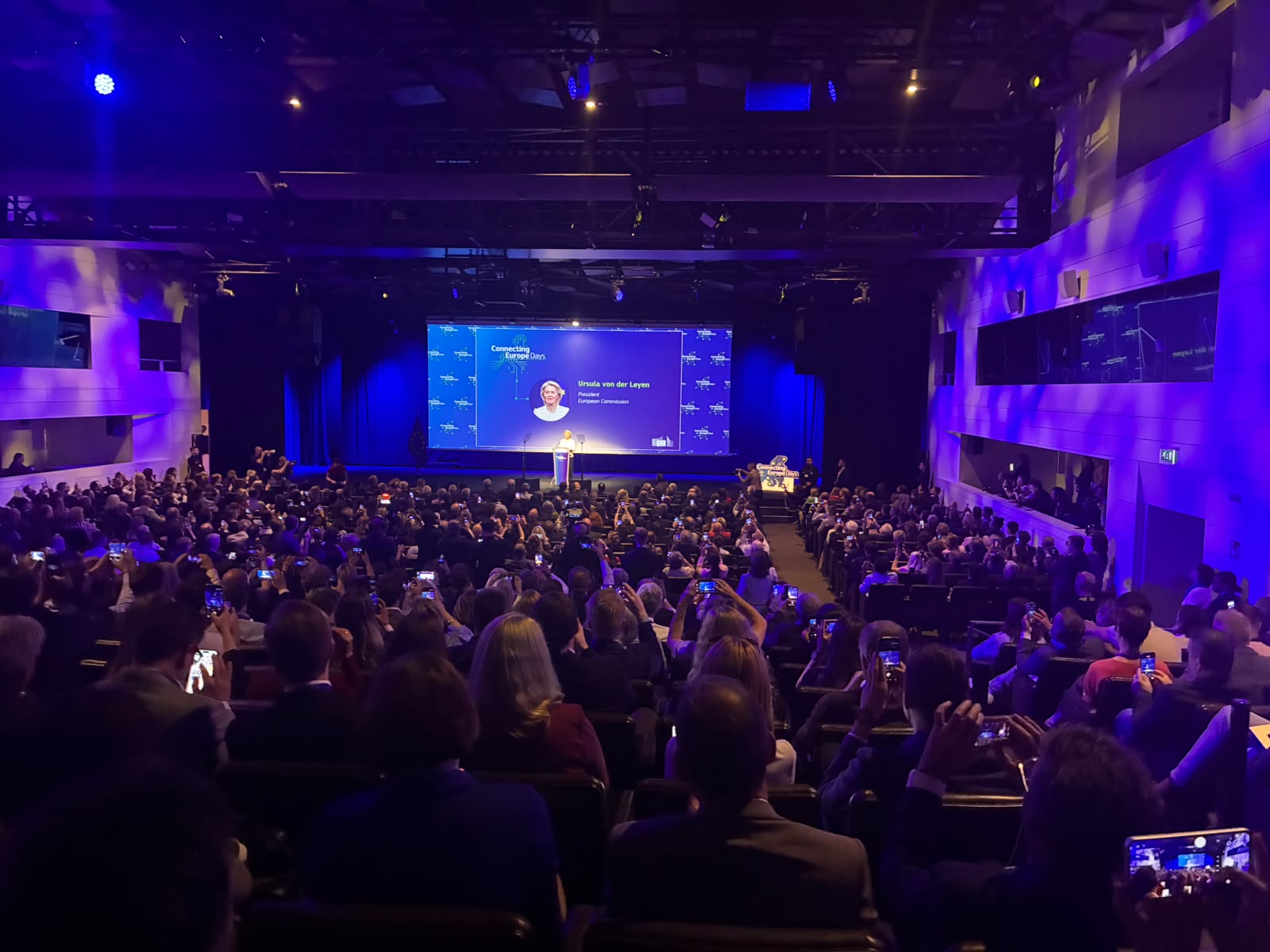
The event opened with an address by European Commission President Ursula von der Leyen. President von der Leyen placed transport infrastructure in the wider context of European competitiveness, connectivity and security. Among the priorities highlighted were completing Europe’s transport connections, addressing bottlenecks and missing links and advancing towards a genuine European Transport Union. The ability of transport infrastructure to contribute to Europe’s resilience and military mobility was another important theme of the event.
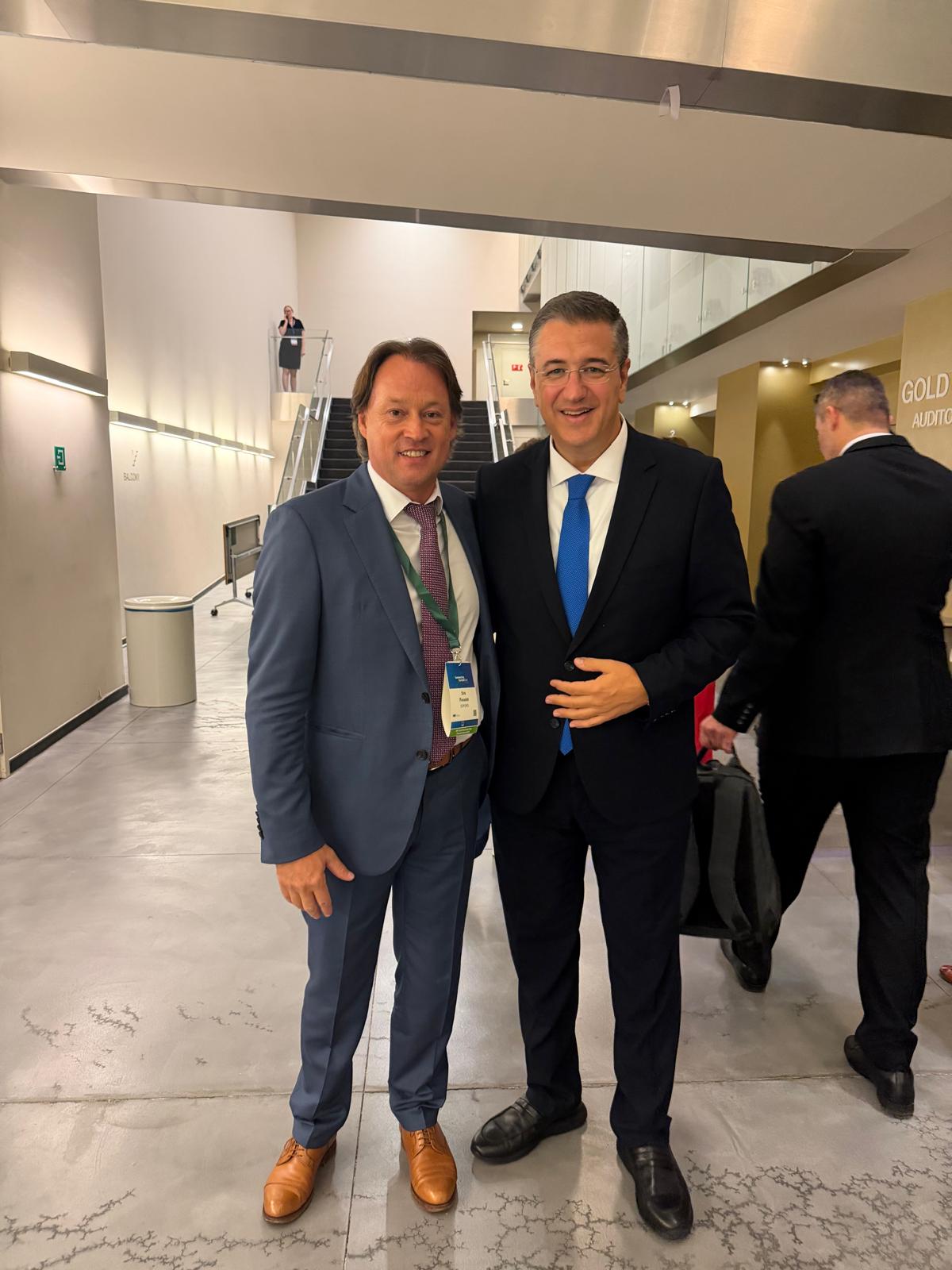
CED2026 also provided an opportunity for a direct exchange between ESPORG General Manager Dirk Penasse and Apostolos Tzitzikostas, European Commissioner for Sustainable Transport and Tourism.
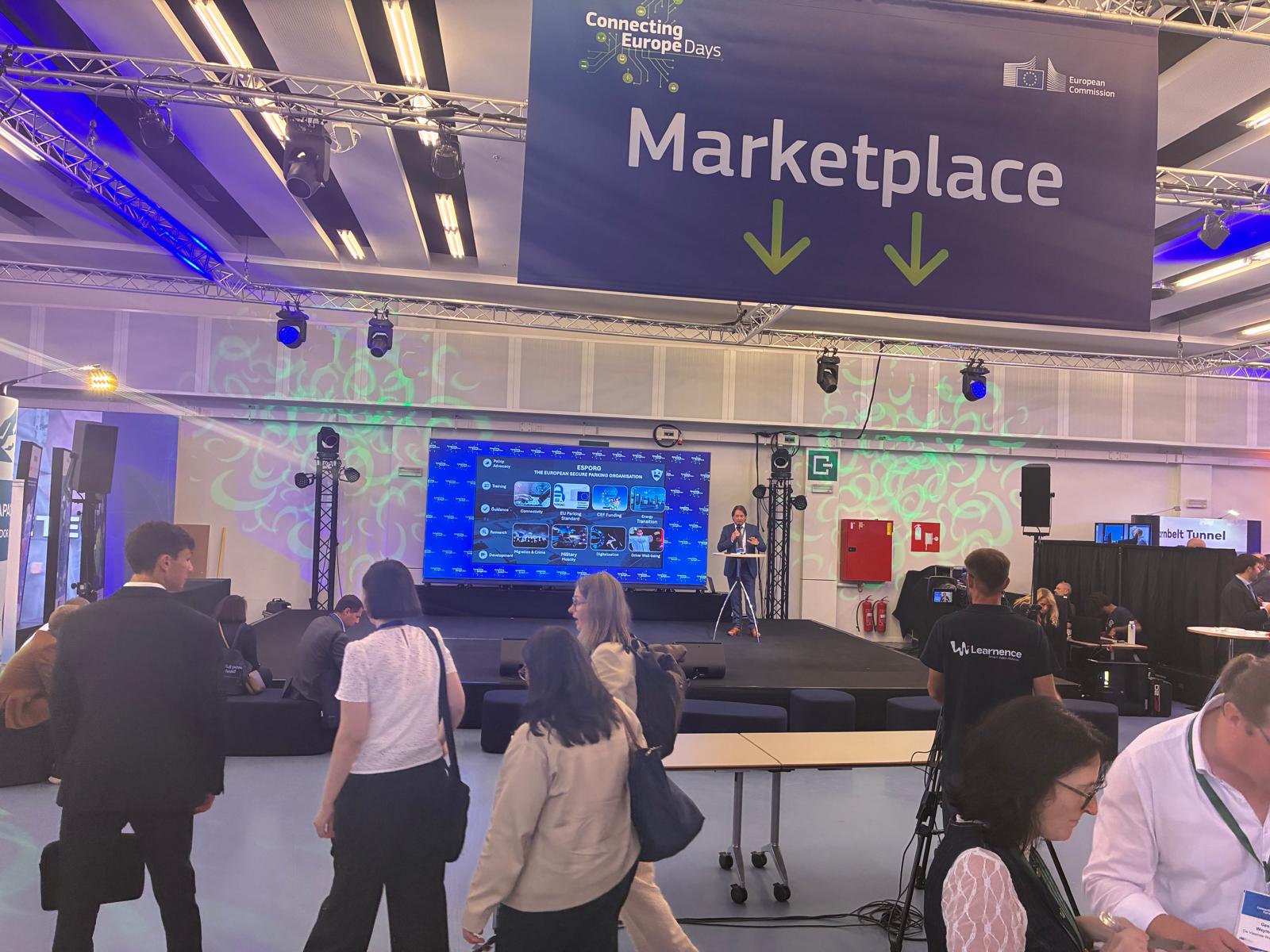
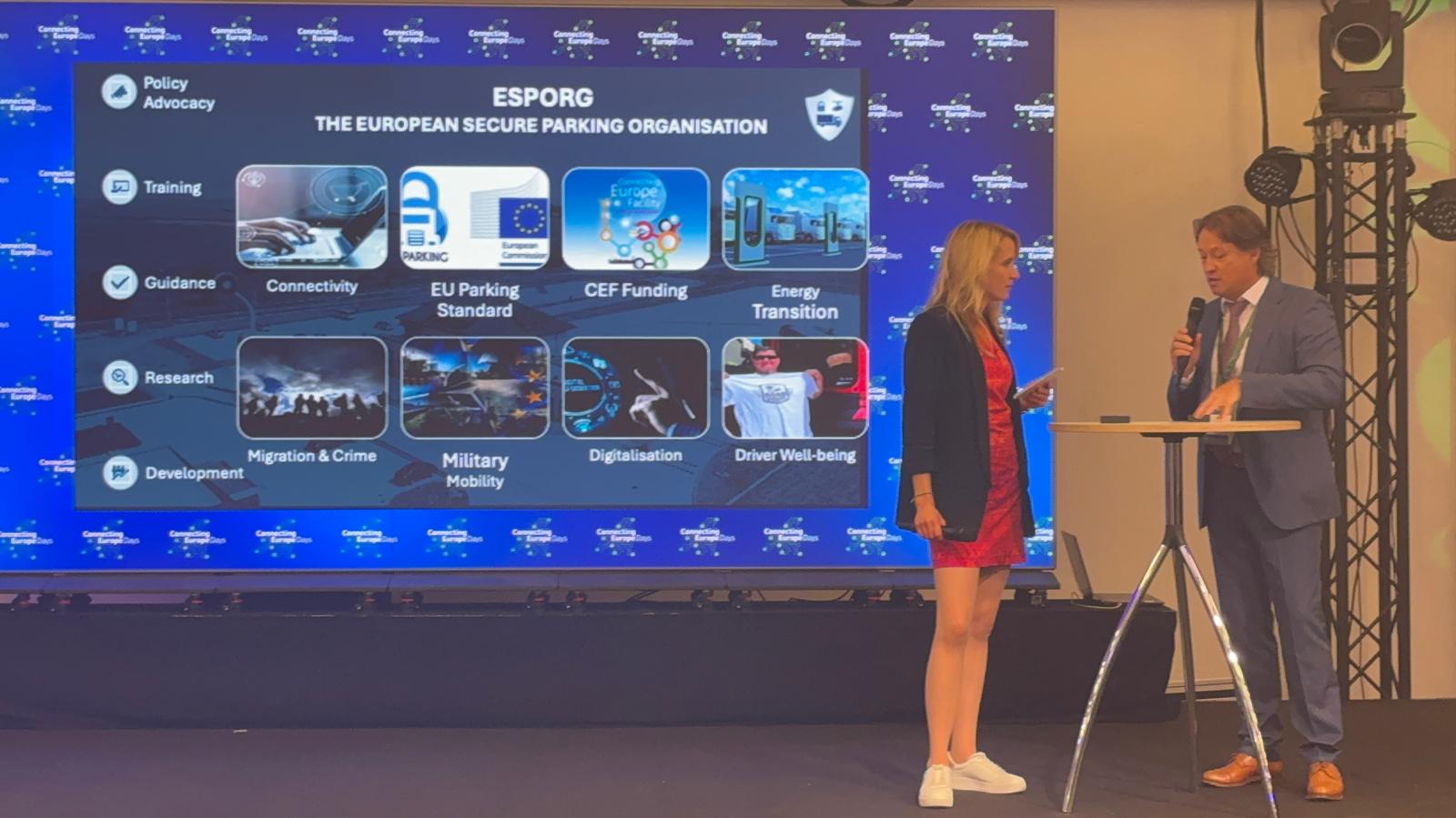
At the Connecting Europe Days Marketplace, Dirk Penasse presented ESPORG’s concept of the parking area of the future as an essential service hub for the logistics chain.
The presentation connected several areas of ESPORG’s work: implementation of the EU Parking Standard, the European Wellbeing Initiative – EWELLIN, the Green Parking Standard, digitalisation and the potential for parking infrastructure to serve dual-use and military mobility requirements.
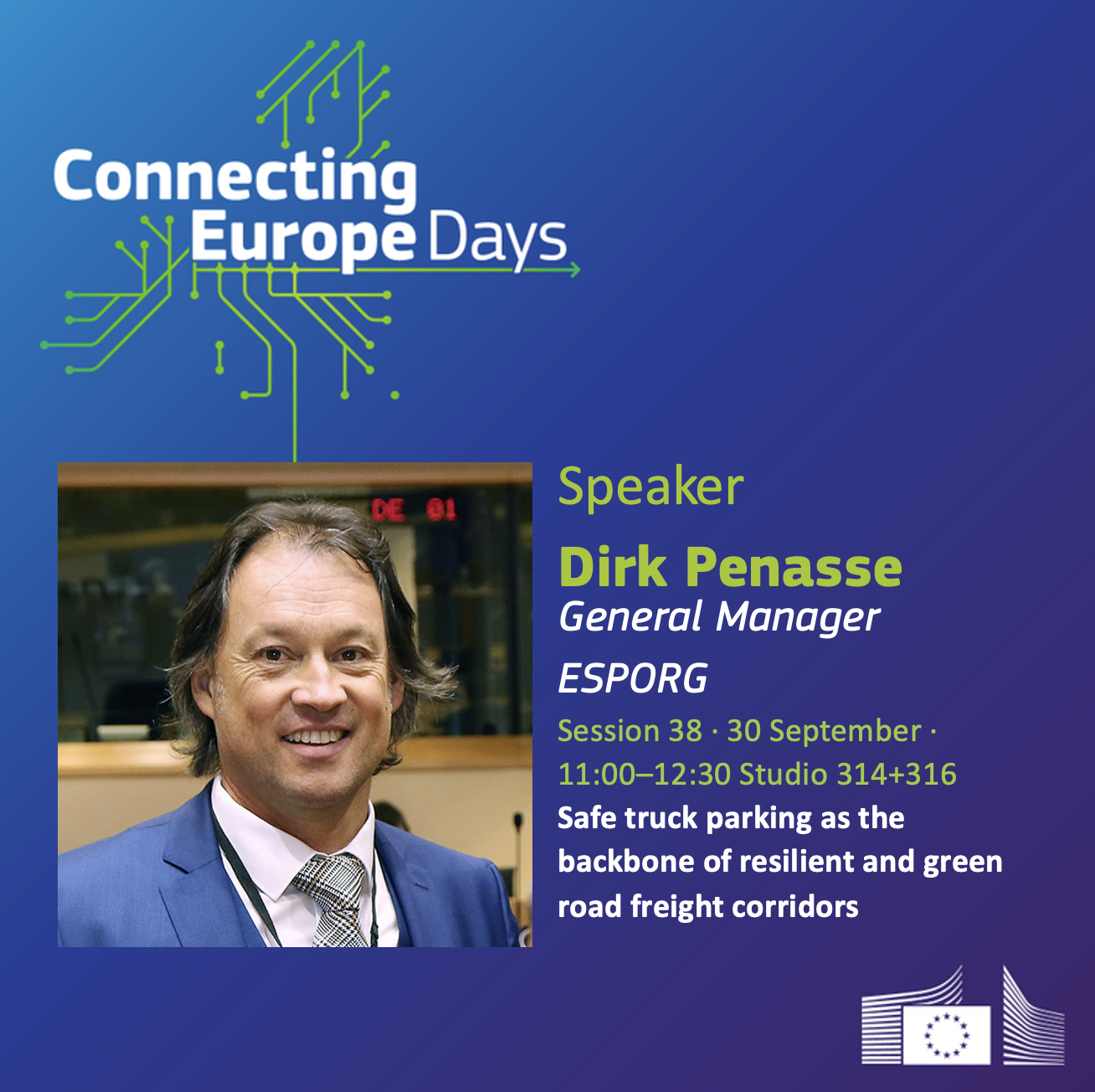
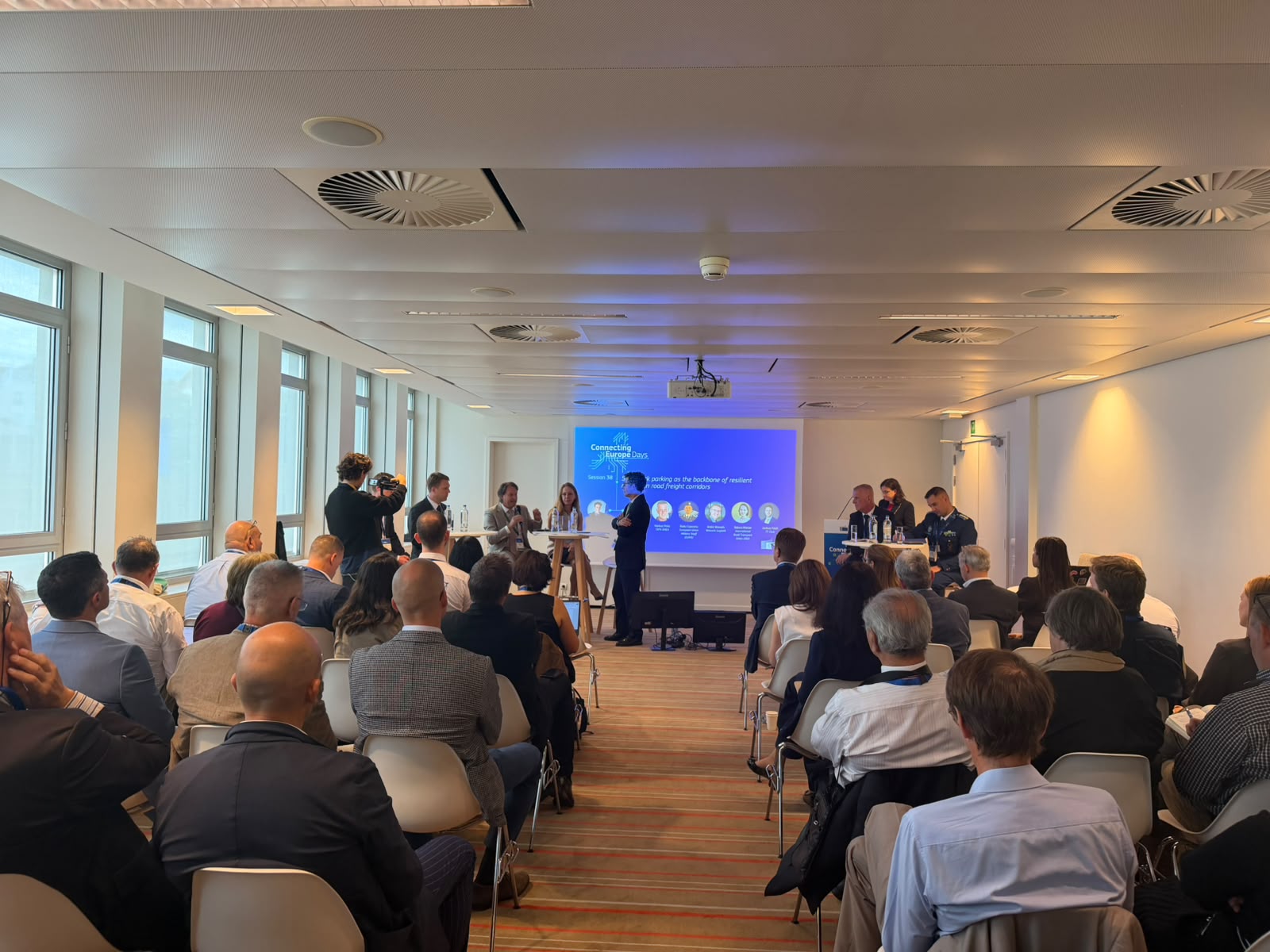
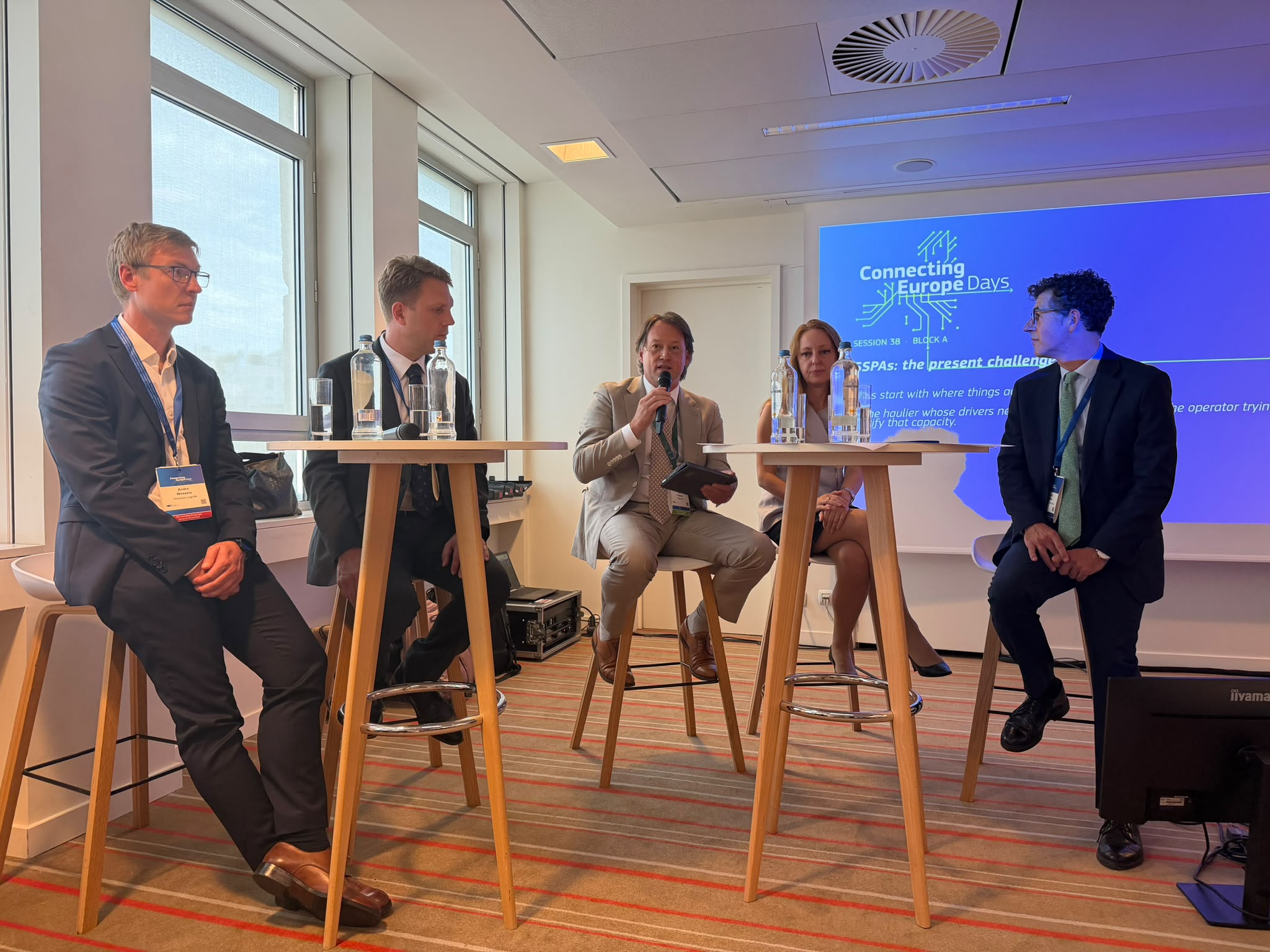
ESPORG General Manager Dirk Penasse joined the session to provide the parking operators’ perspective on the deployment of certified SSPAs across the TEN-T network. The discussion was moderated by Frédéric Versini, Head of Unit C1 – Road Transport, Directorate-General for Mobility and Transport (DG MOVE), European Commission.
ESPORG focused its contribution on the practical requirements for the next generation of parking areas: safety and security for drivers, vehicles and cargo; adequate services for women and driver wellbeing; digitalisation; infrastructure for zero-emission road freight; and the possible dual use of strategically located facilities for military mobility. Dirk Penasse highlighted both the progress made and the practical barriers slowing deployment, including lengthy permitting procedures, insufficient integration of truck parking into spatial planning and the time required to build, upgrade and certify facilities. Dirk Penasse also stressed that future SSPAs must be designed for new requirements, particularly driver wellbeing and charging infrastructure for electric trucks.
“This is only the starting point: things are moving in the right direction, but we still need support at many levels.” — Dirk Penasse, General Manager, ESPORG
TEN-T Corridor Coordinators meet ESPORG
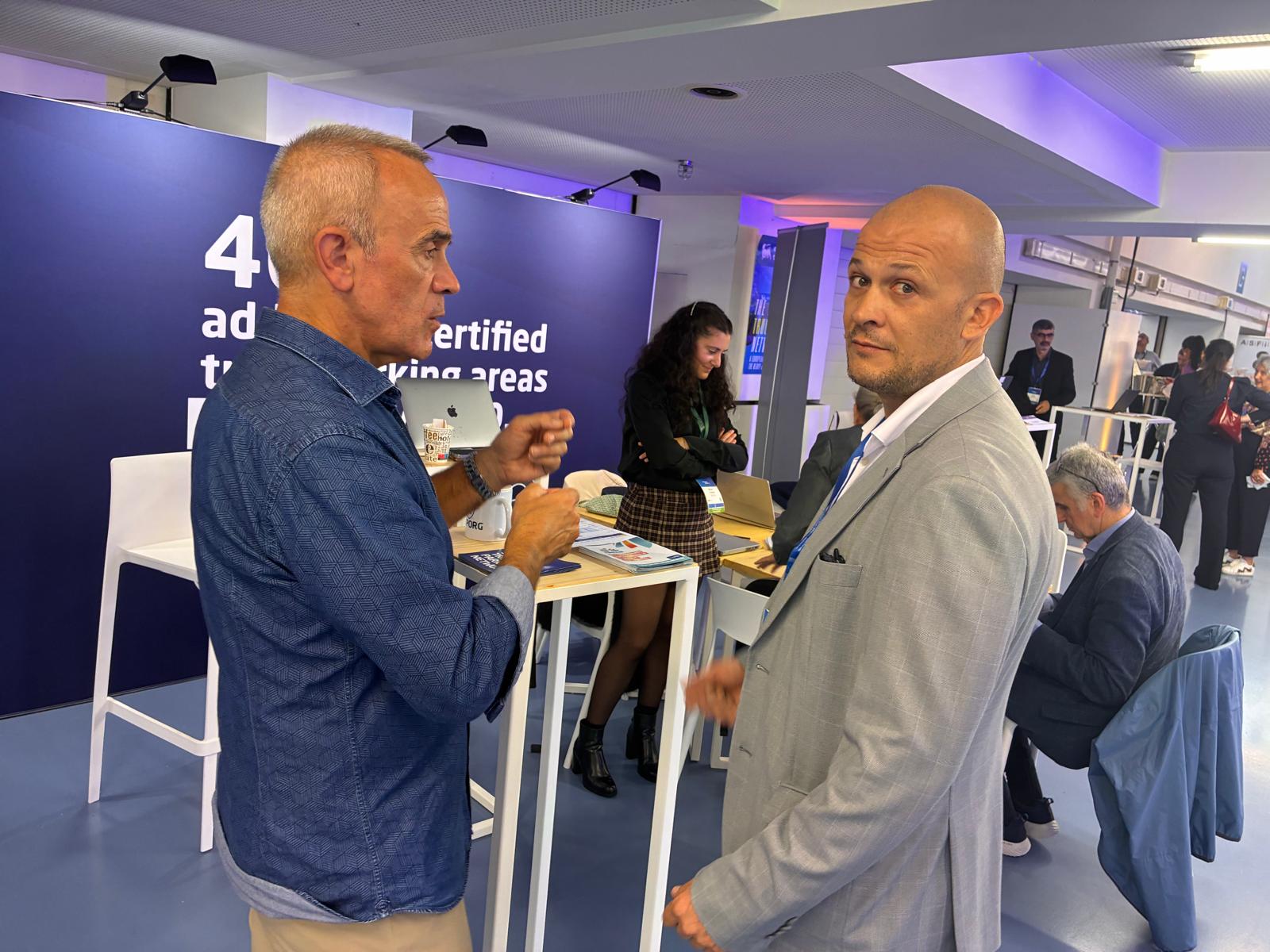
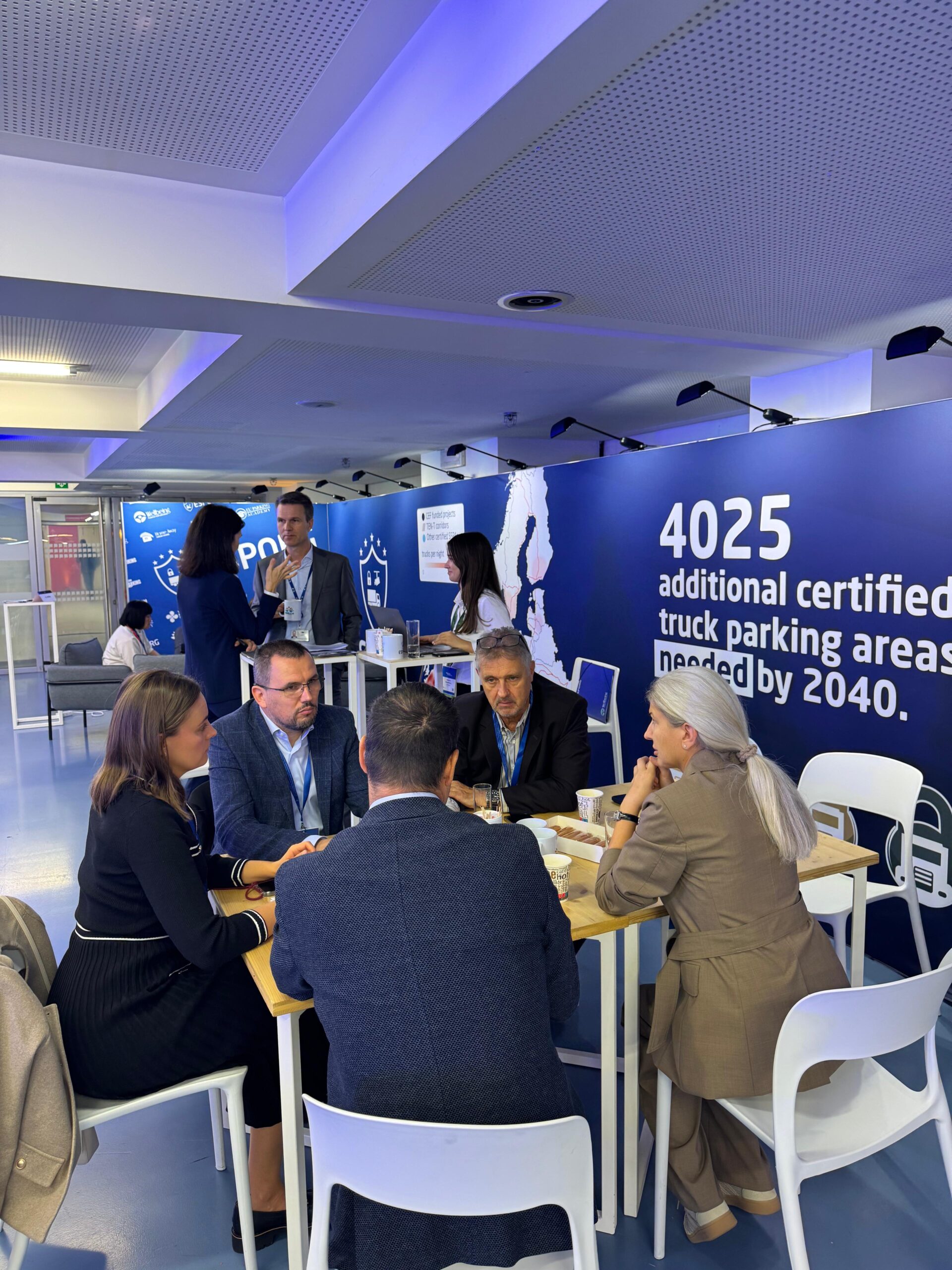
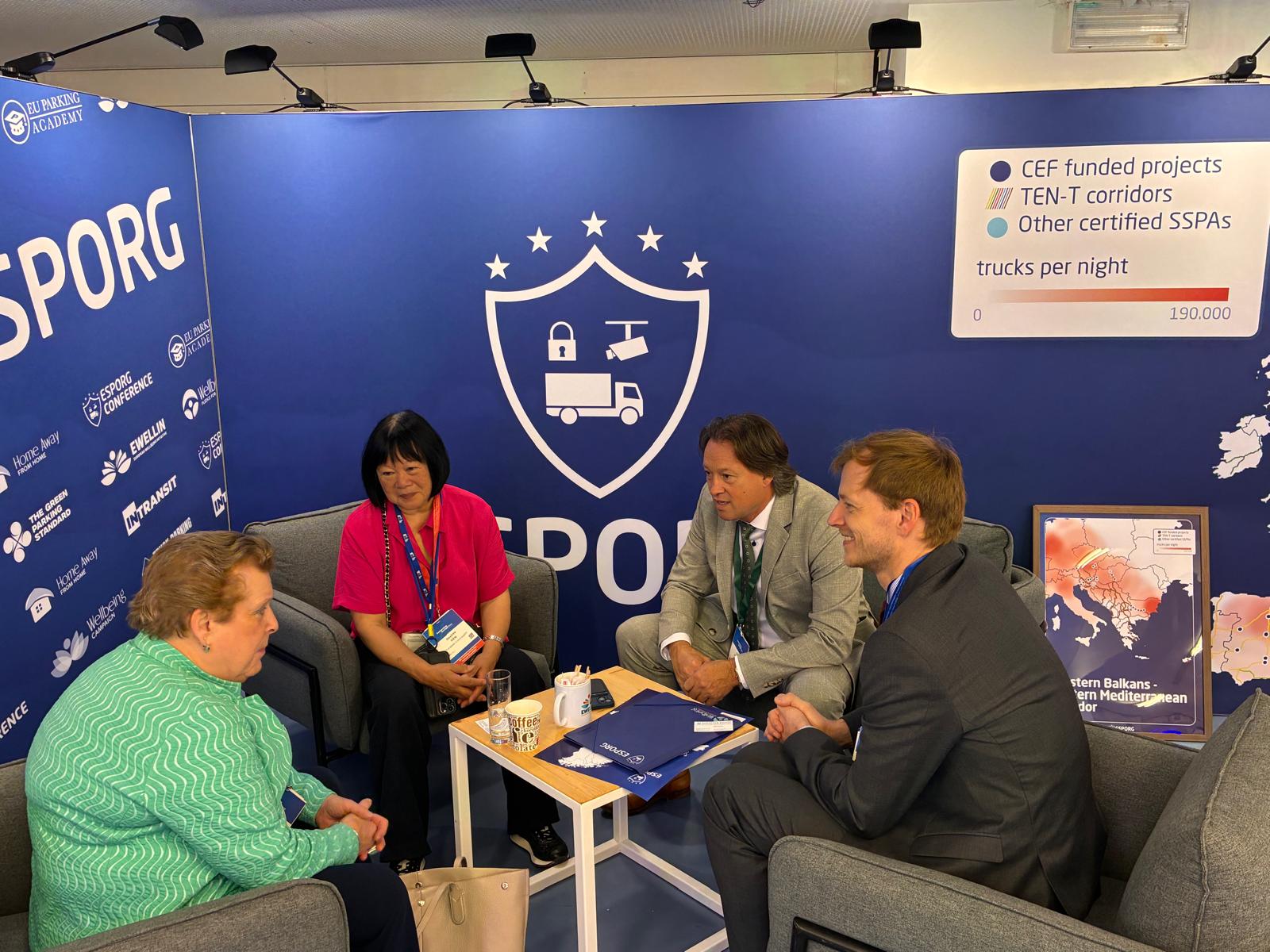
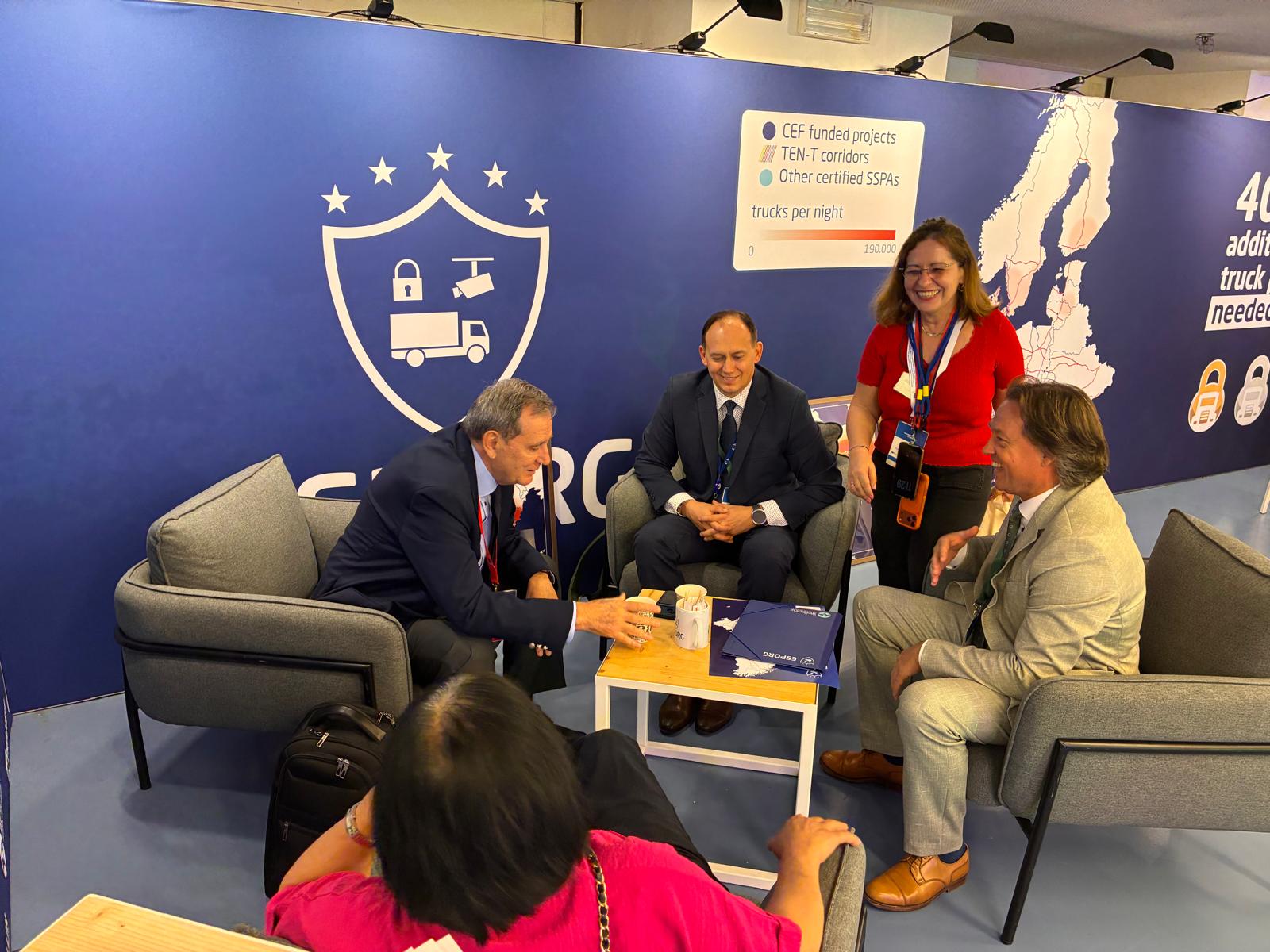
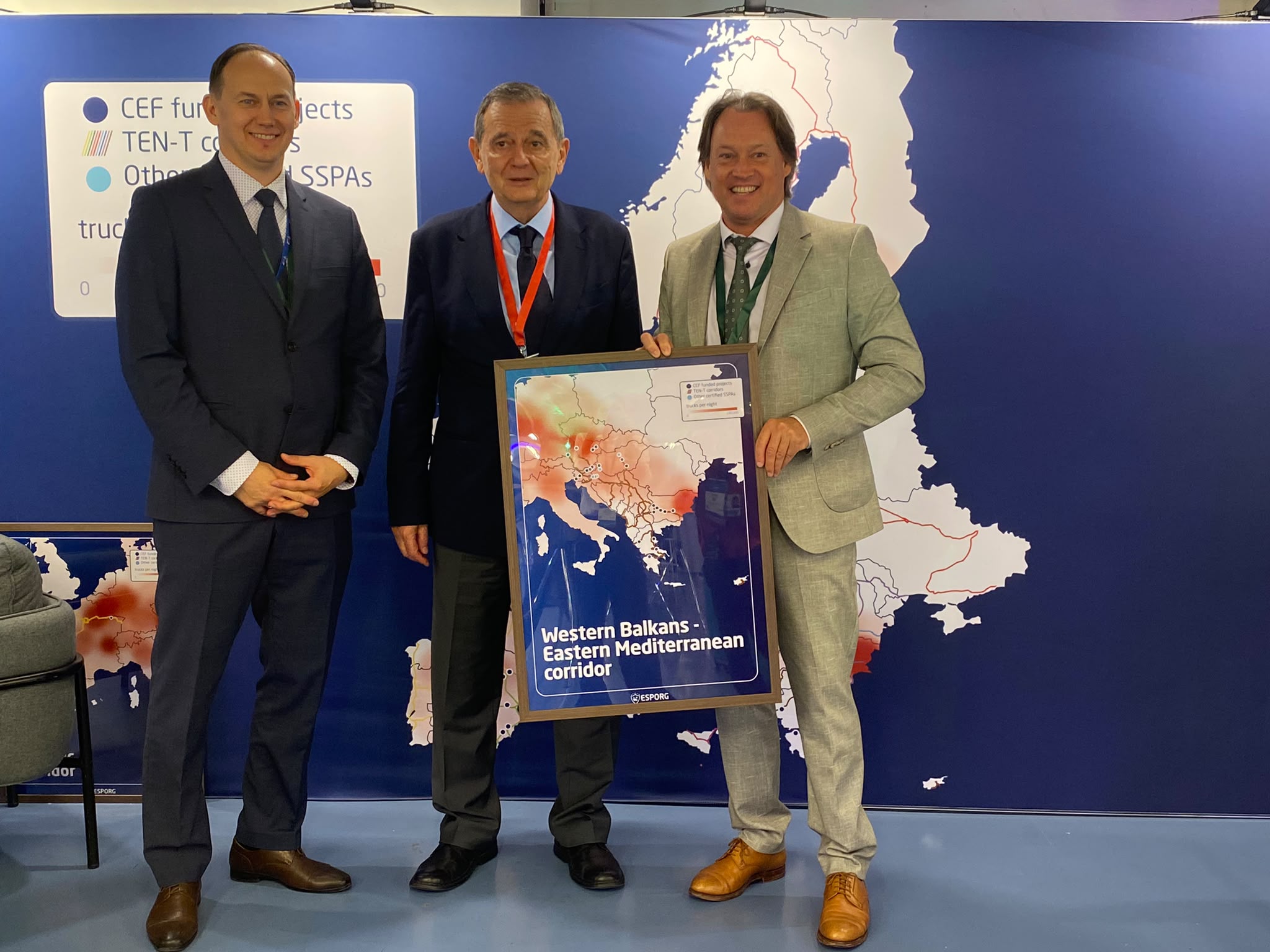
An important part of ESPORG’s work during Connecting Europe Days consisted of bilateral discussions with the European Coordinators responsible for the TEN-T European Transport Corridors.
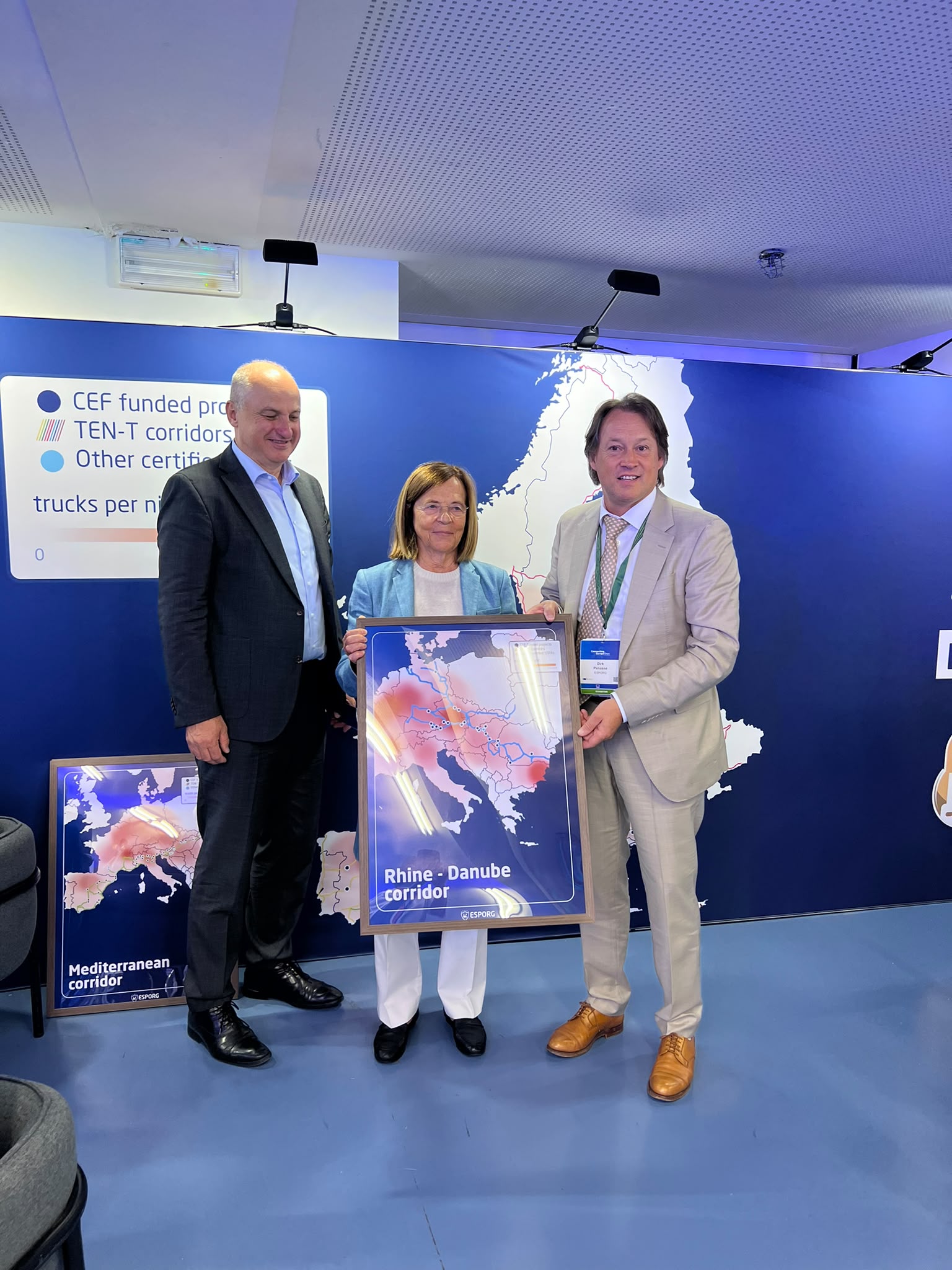
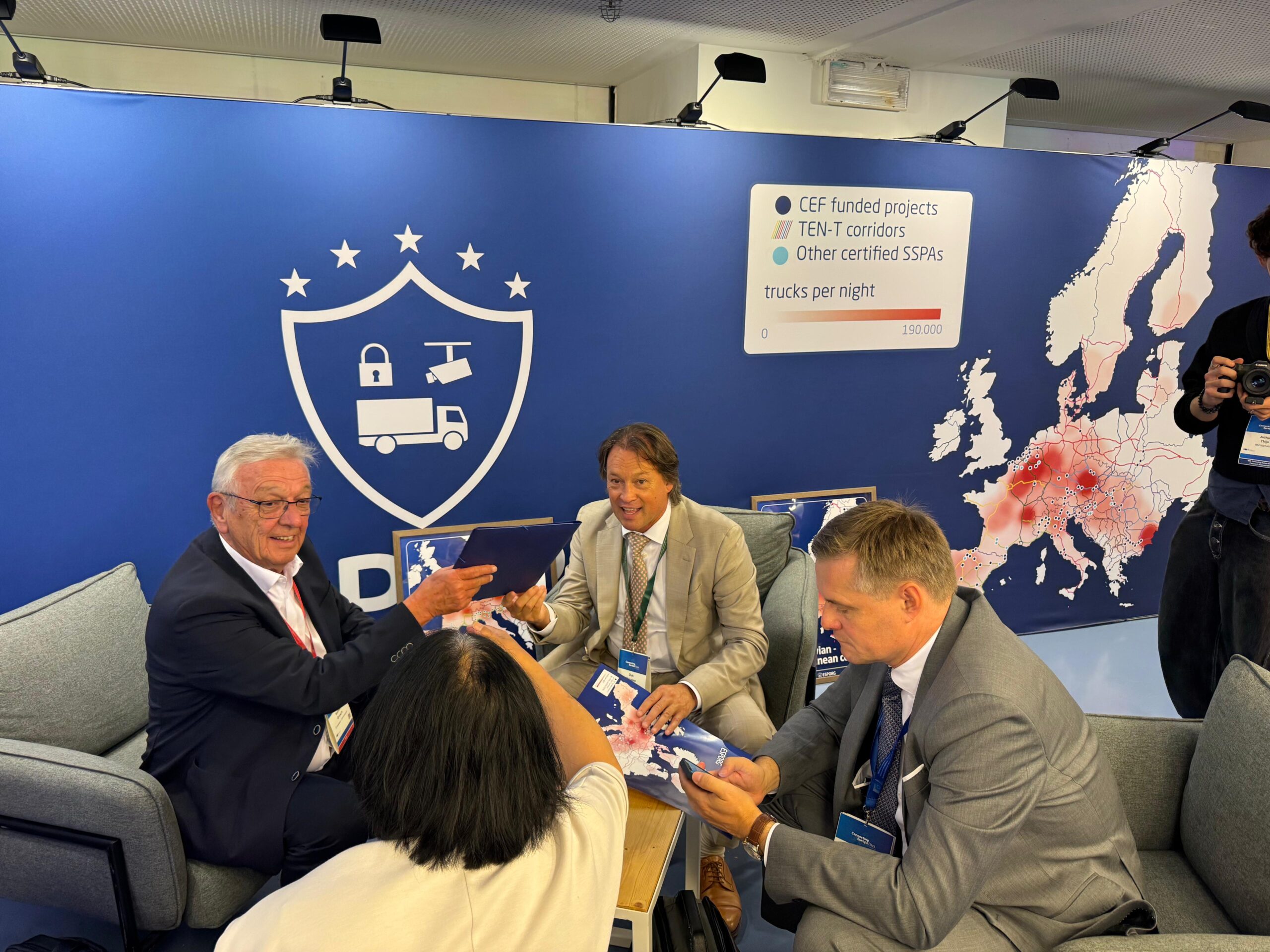
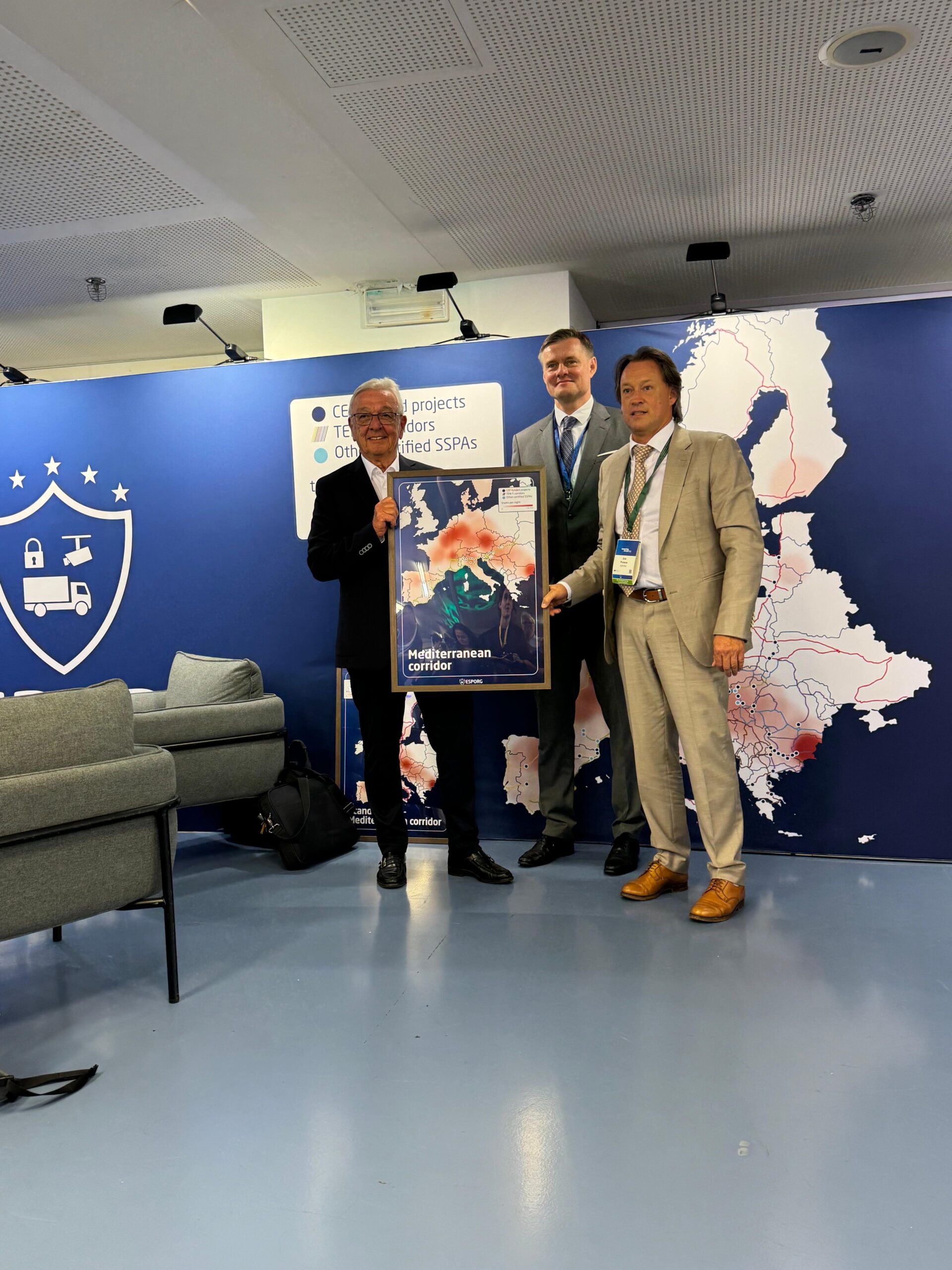
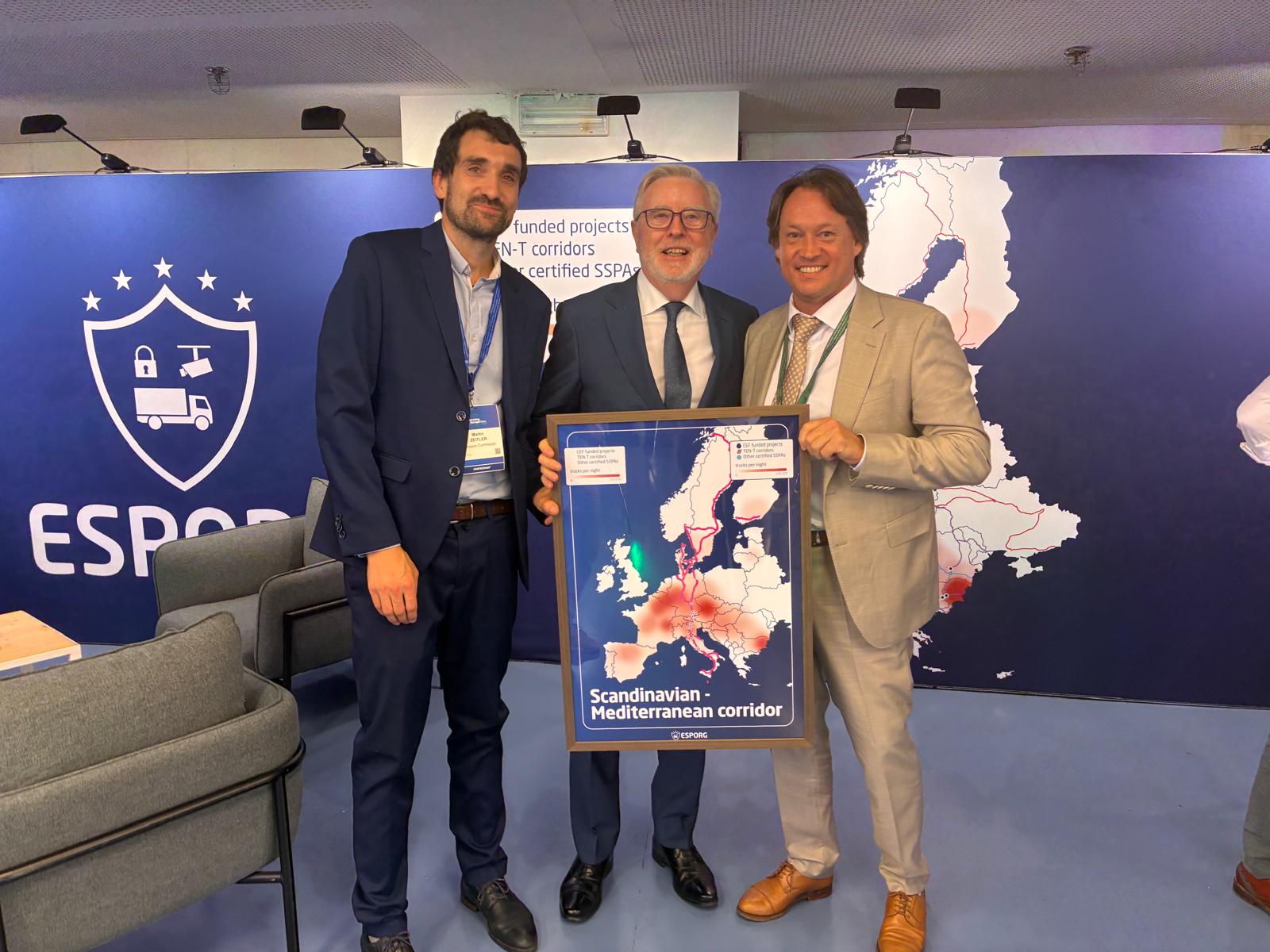
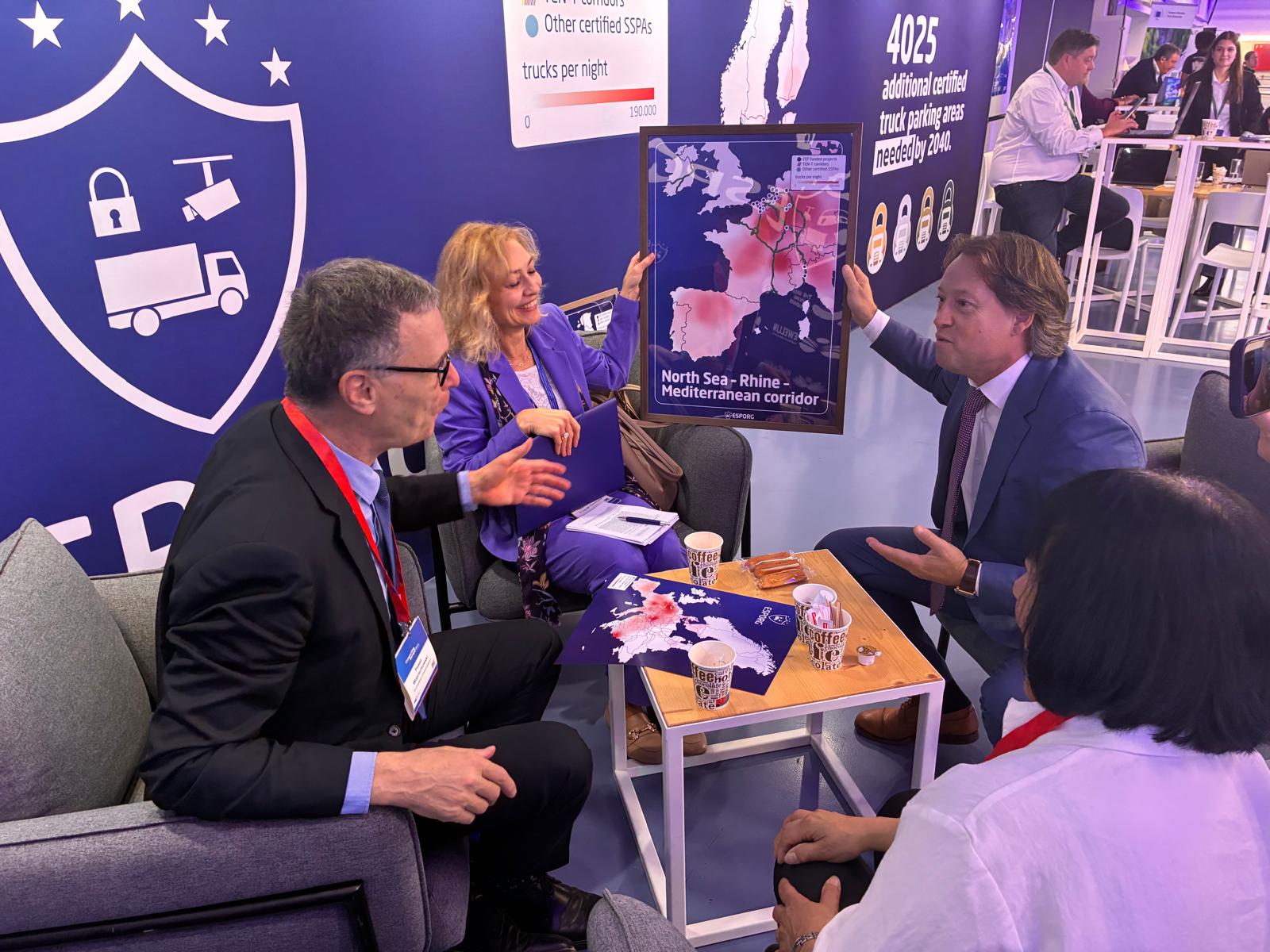
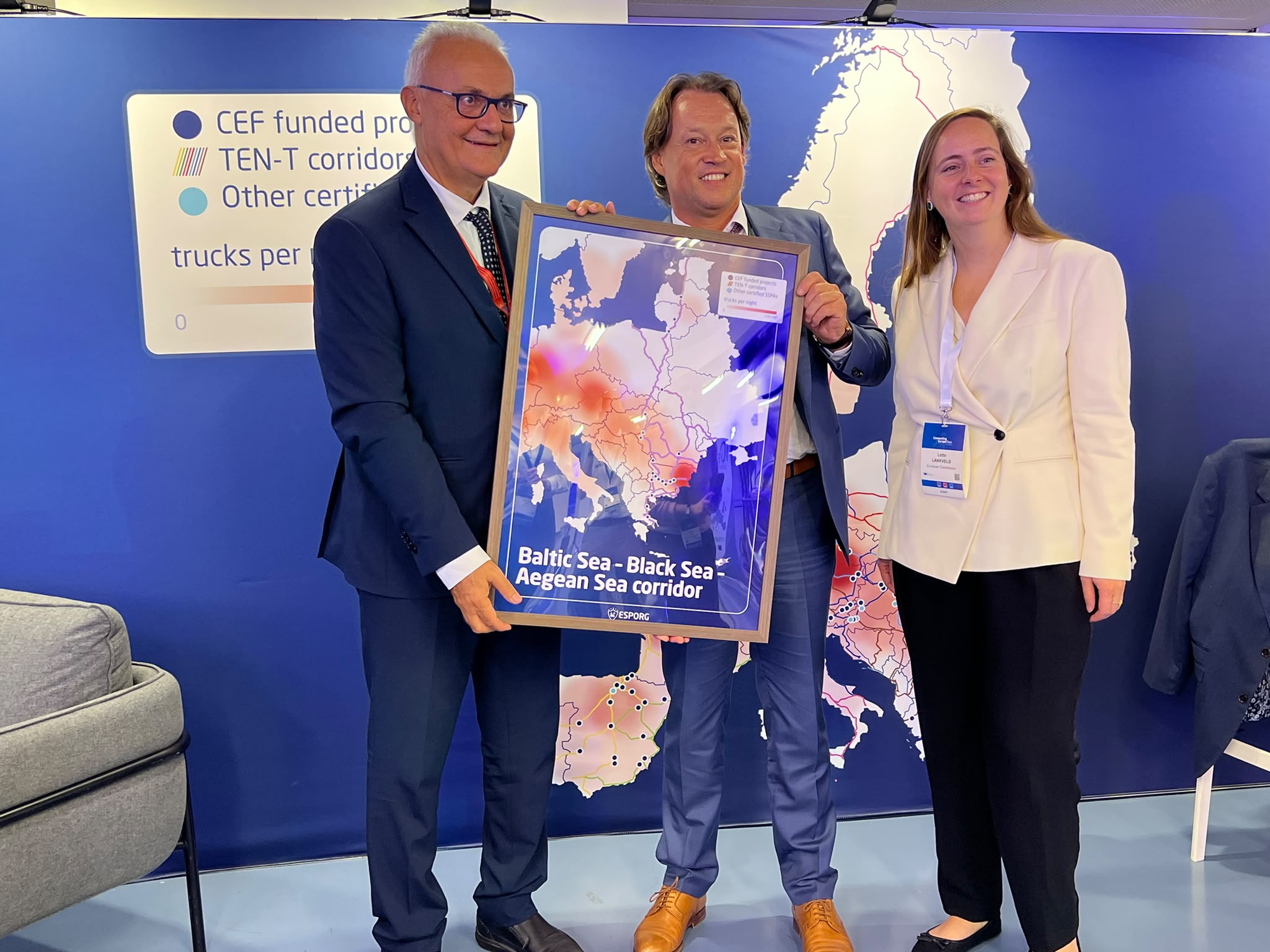
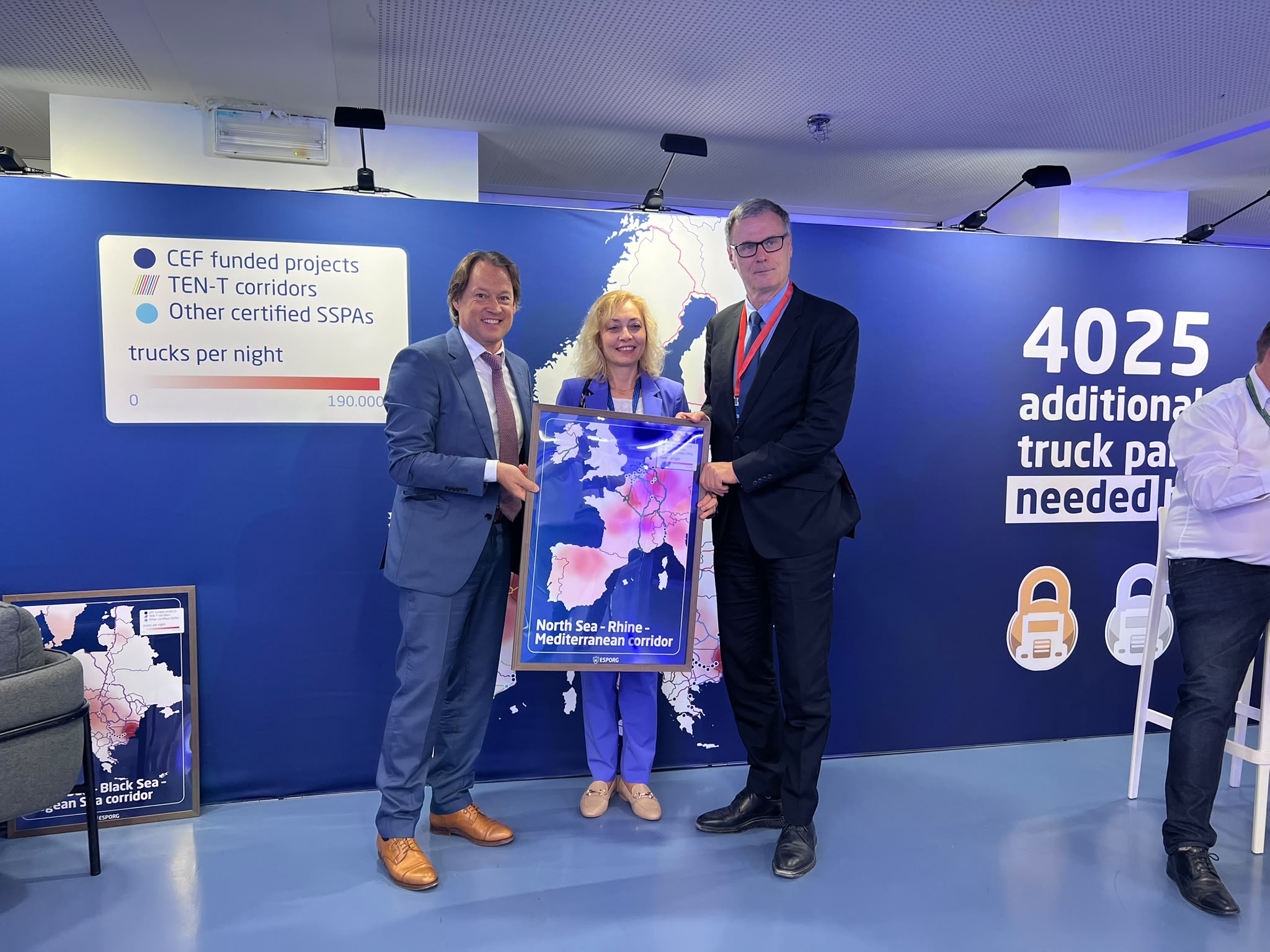
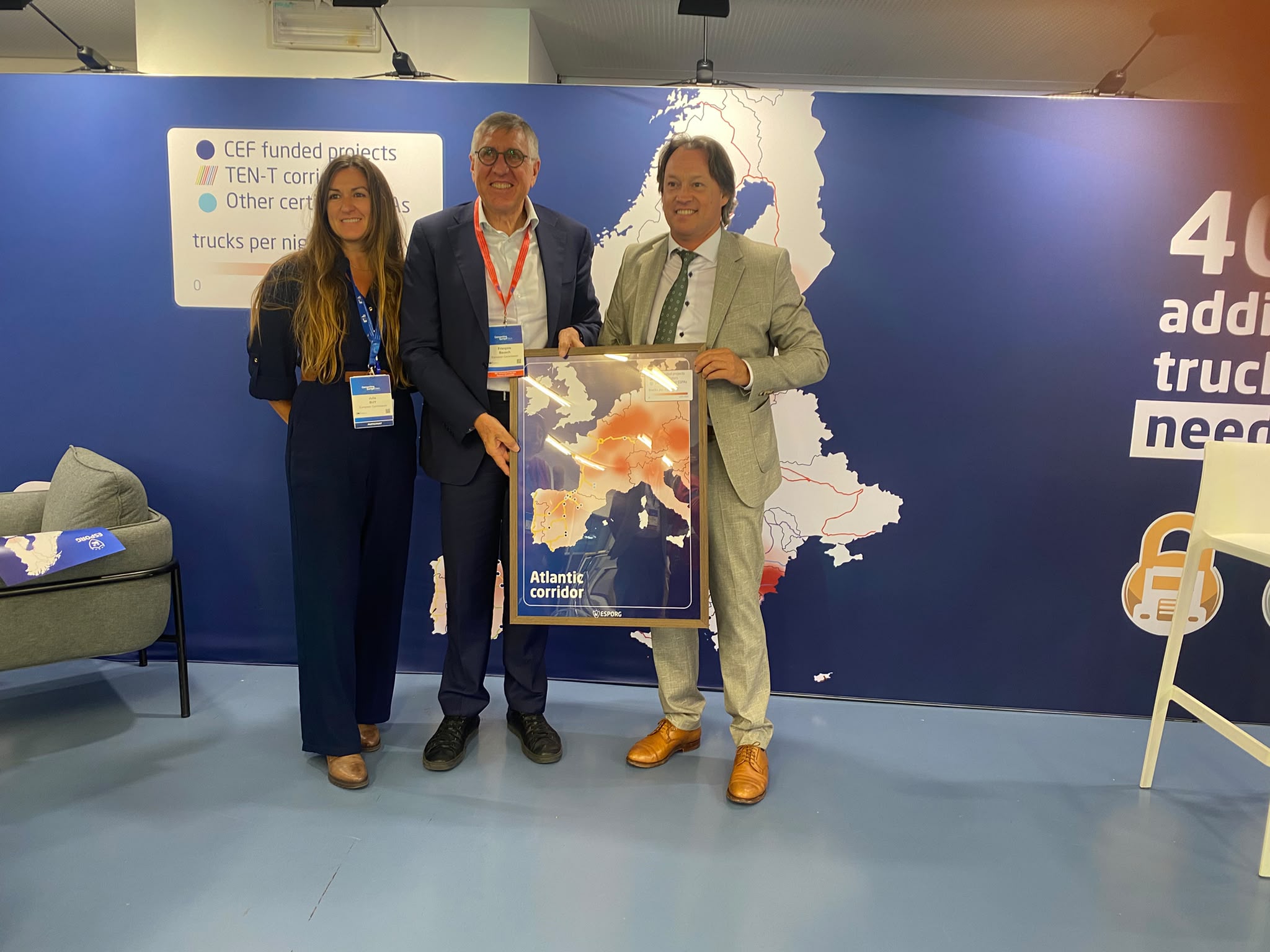
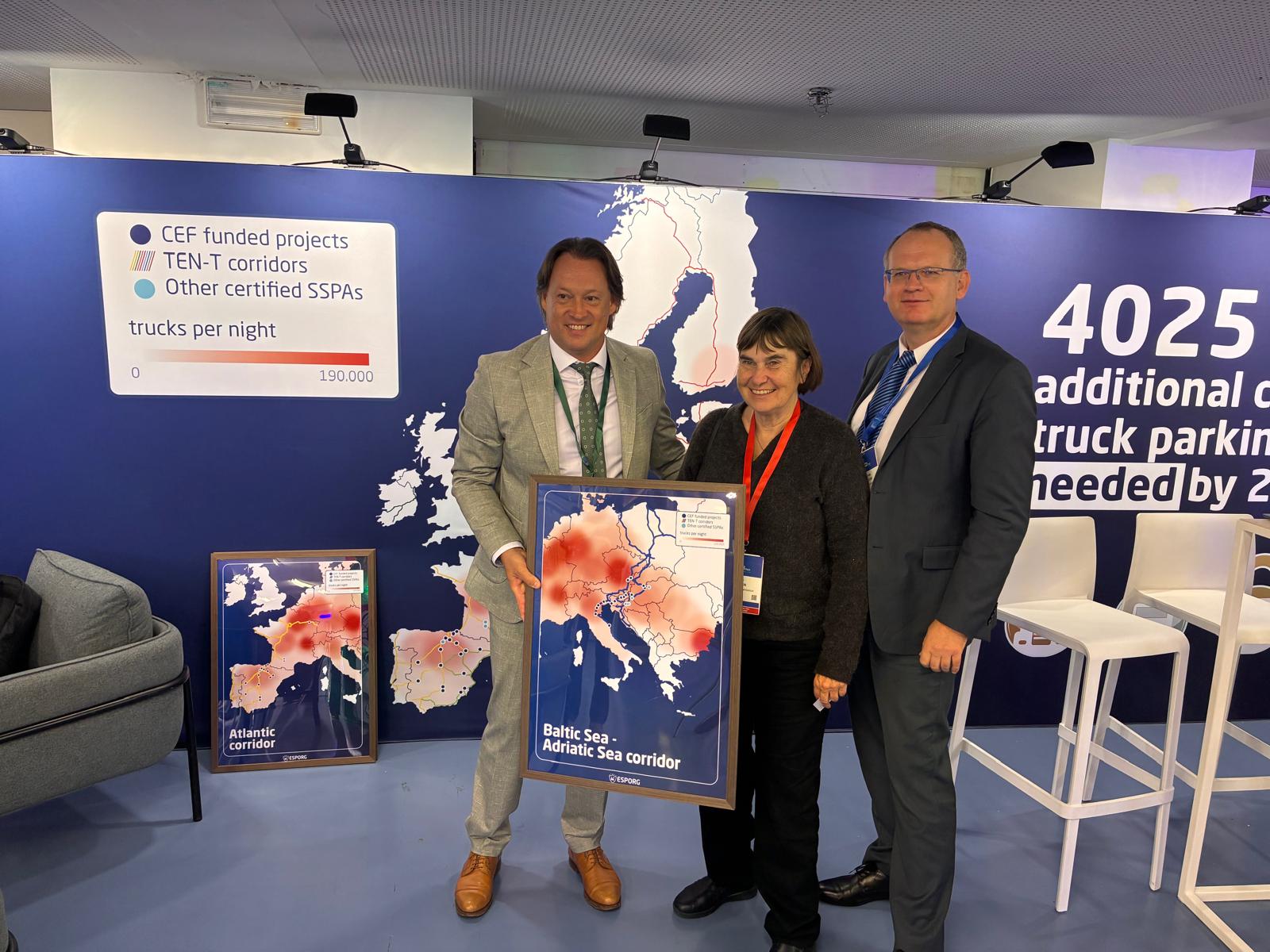
Over the three days, the ESPORG stand welcomed the European Coordinators responsible for eight major TEN-T corridors: Prof. Paweł Wojciechowski, North Sea–Rhine–Mediterranean Corridor; Mario Mauro, Baltic Sea–Black Sea–Aegean Sea Corridor; Margarida Marques, Rhine–Danube Corridor; Mathieu Grosch, Mediterranean Corridor; Pat Cox, Scandinavian–Mediterranean Corridor; Anne E. Jensen, Baltic Sea–Adriatic Sea Corridor; François Bausch, Atlantic Corridor; and Marian-Jean Marinescu, Western Balkans–Eastern Mediterranean Corridor.
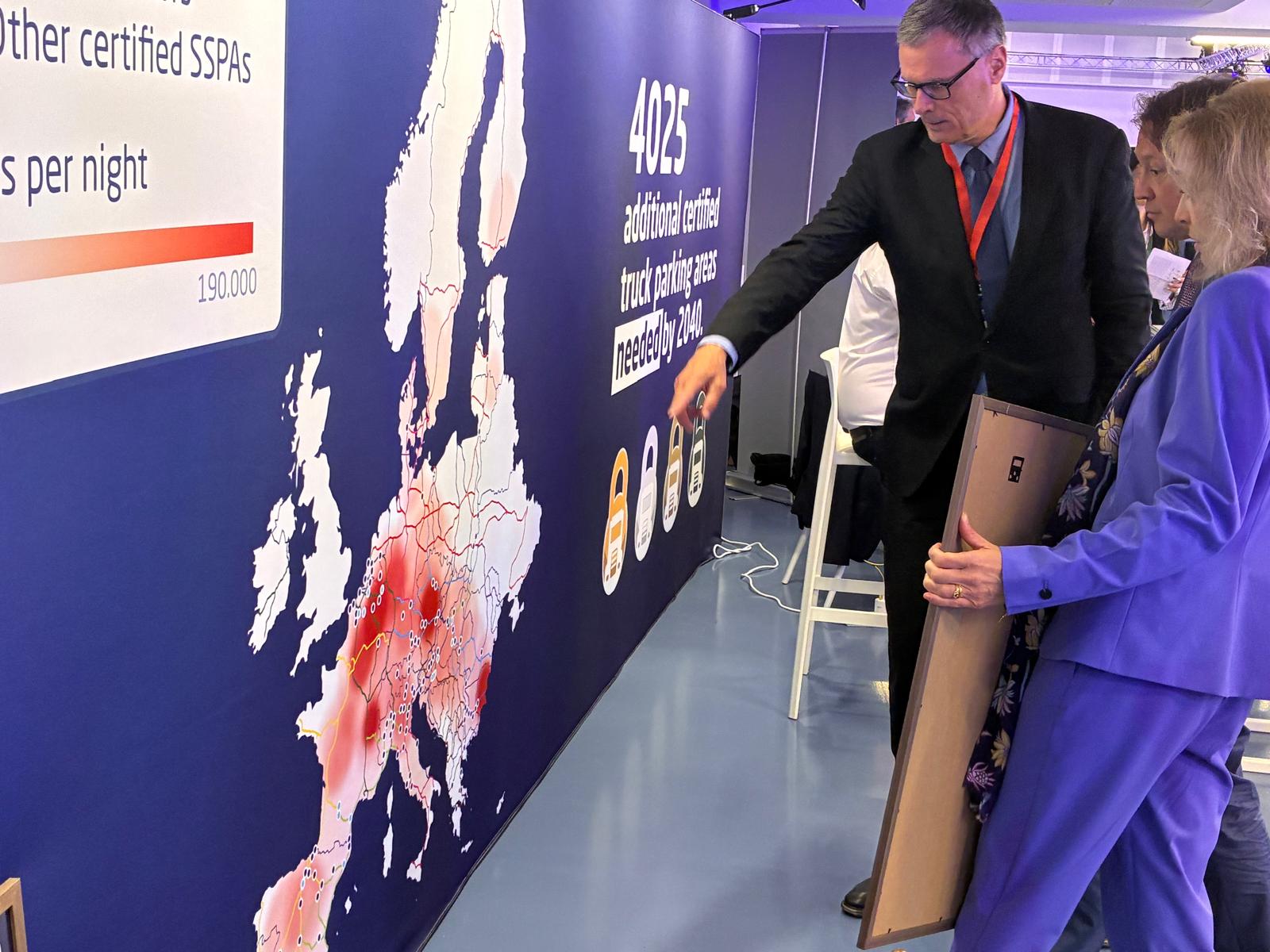
The meetings were practical and corridor-specific. Dirk Penasse presented ESPORG’s analysis of existing secure parking capacity, Safe and Secure Parking Areas already being developed with Connecting Europe Facility (CEF) support, remaining gaps in the network and priority locations for additional SSPA development.
The discussions also addressed the need to coordinate future parking capacity with wider TEN-T development rather than treating individual parking projects in isolation.
According to ESPORG’s analysis presented during the event, 4,025 additional certified truck parking areas will be needed across the EU by 2040.

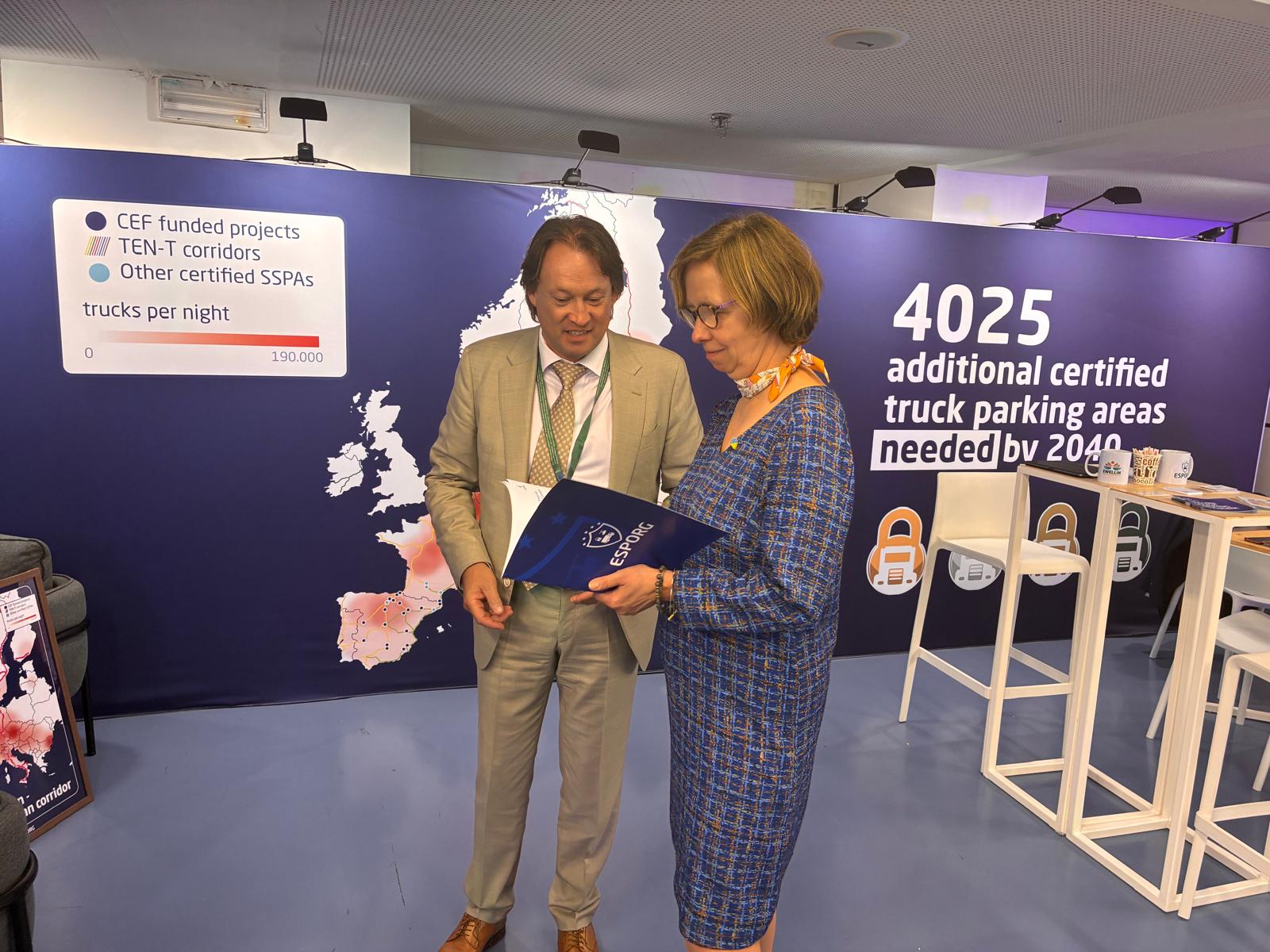
Connecting Europe Days also enabled direct exchanges between ESPORG and senior representatives of the European institutions.
Magda Kopczyńska, Director-General of DG MOVE, visited the ESPORG stand and exchanged with the team on the development of Safe and Secure Parking Areas and their role within European road transport policy. Other institutional contacts during the three-day event included representatives and officials connected to the European Commission’s Directorate-General for Mobility and Transport (DG MOVE) and CINEA – the European Climate, Infrastructure and Environment Executive Agency – managing Connecting Europe Facility programme supporting European transport infrastructure.
ESPORG also welcomed representatives of the European Labour Authority (ELA) to its stand, with discussions focusing on the social dimension of road transport, drivers’ working conditions and access to practical information for professional drivers.
Driver wellbeing on the European agenda
The human dimension of road freight was also represented directly in the CED2026 programme.
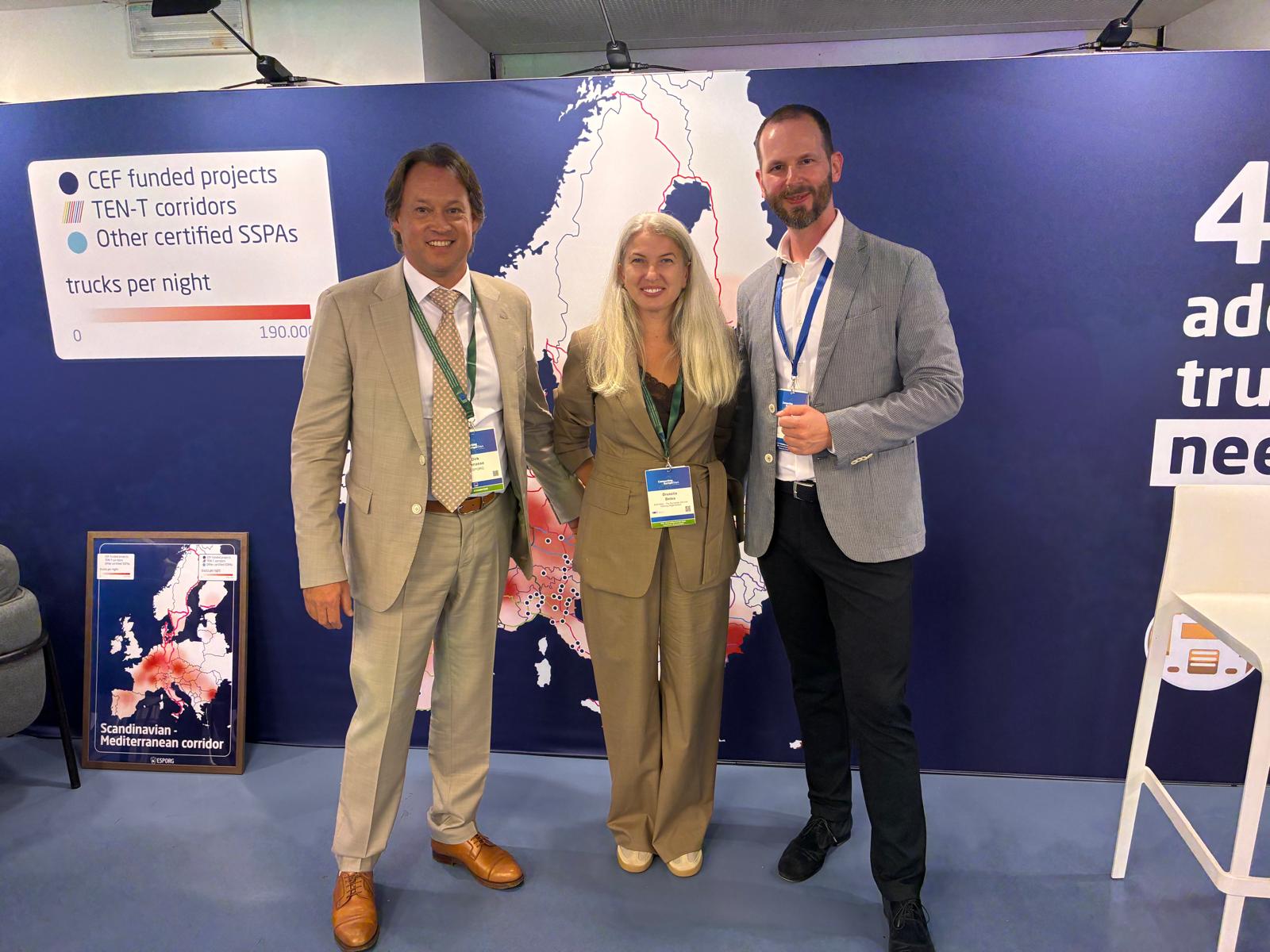
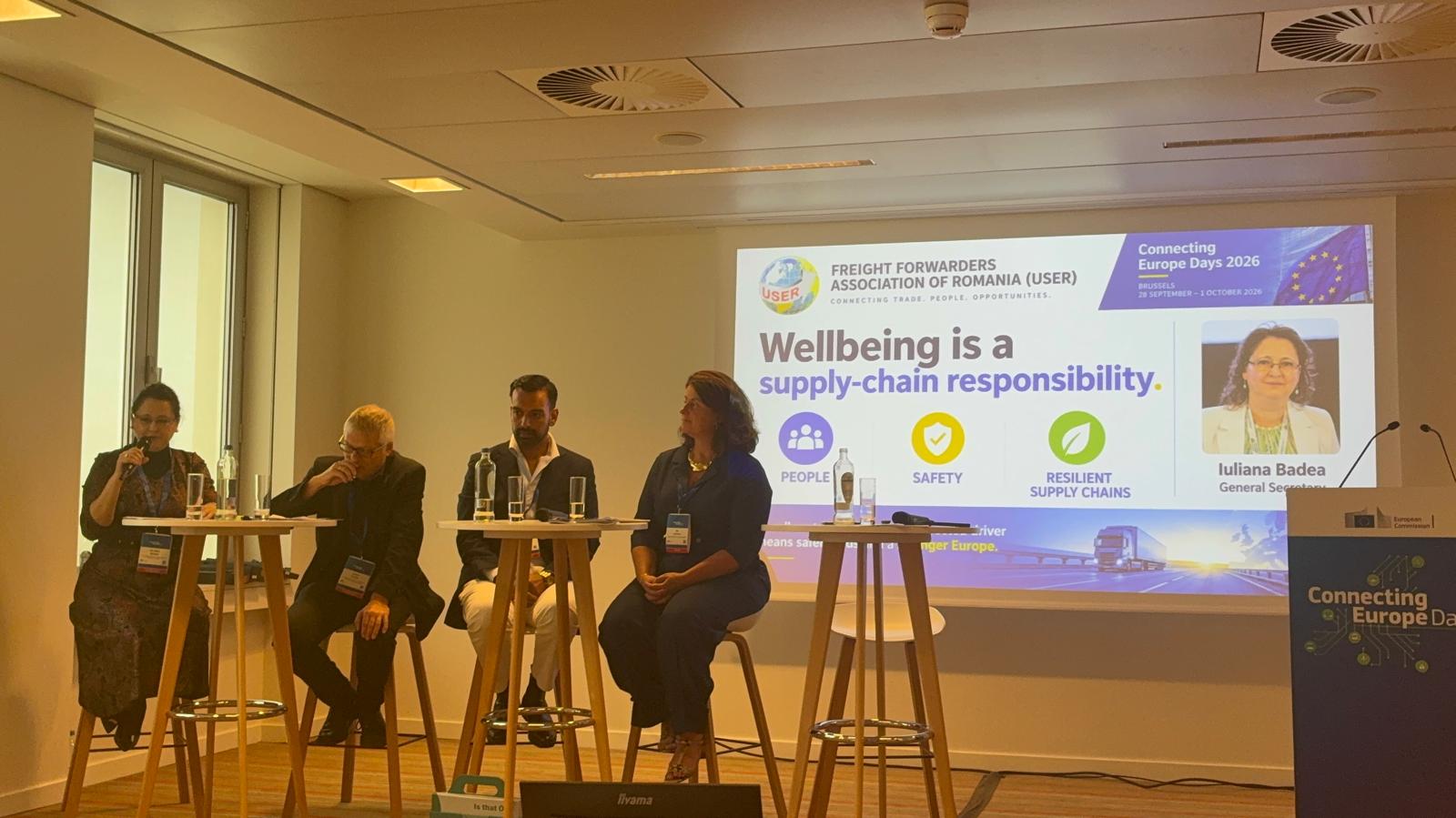
Iuliana Badea, Secretary General of the Romanian Freight Forwarders Association USER and ESPORG Wellbeing Ambassador, spoke during the session “Improving working conditions in transport and tourism”, moderated by DG MOVE Director-General Magda Kopczyńska.
Iuliana Badea presented the European Wellbeing Initiative – EWELLIN and brought to the discussion the experience of the Wellbeing Days initiative and the perspective of freight forwarders.
The central message was that driver wellbeing is a responsibility shared across the supply chain. Working and resting conditions for professional drivers are therefore relevant not only to transport operators and drivers themselves, but also to freight forwarders, shippers, infrastructure operators and other actors involved in European logistics.
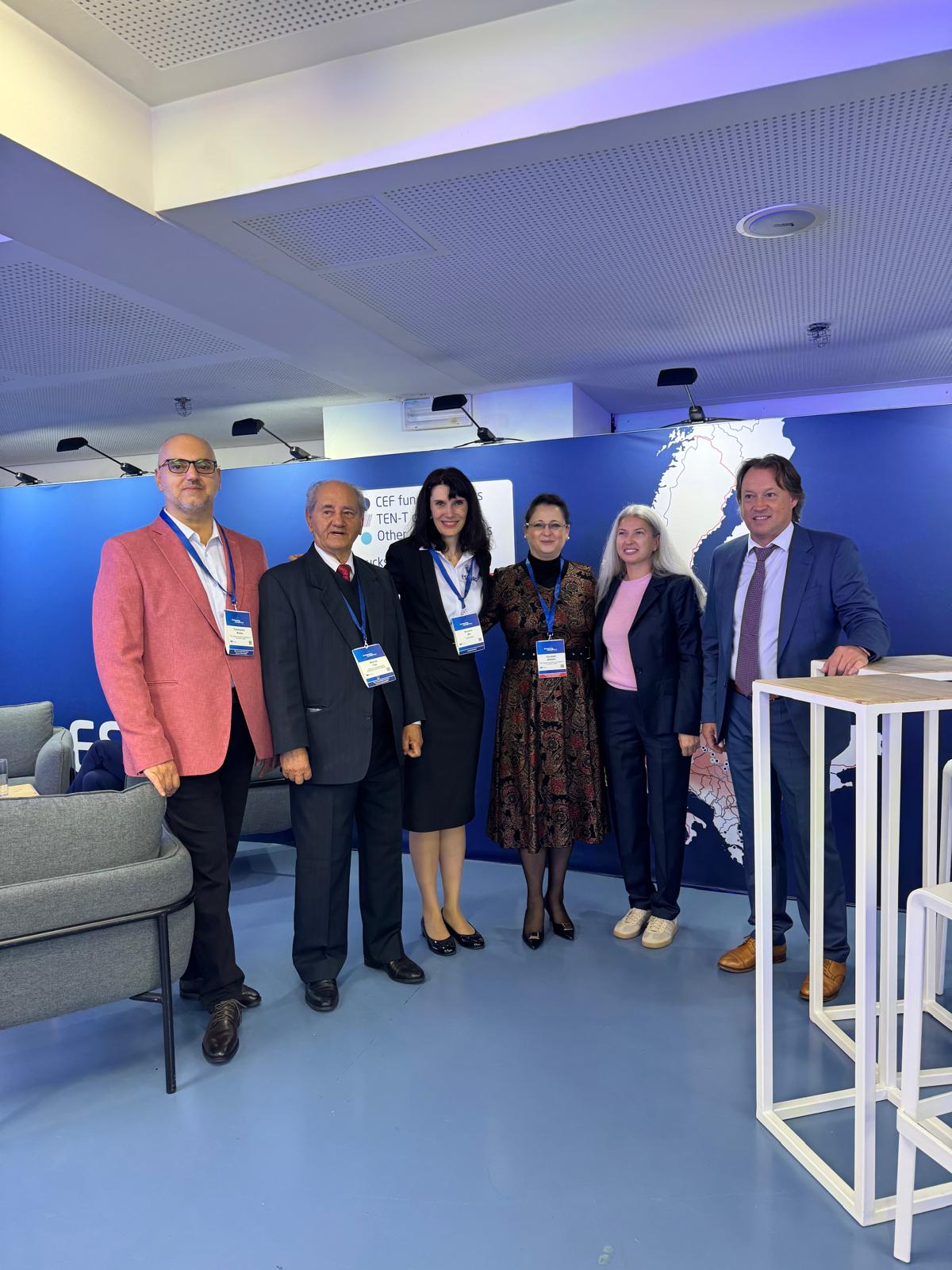
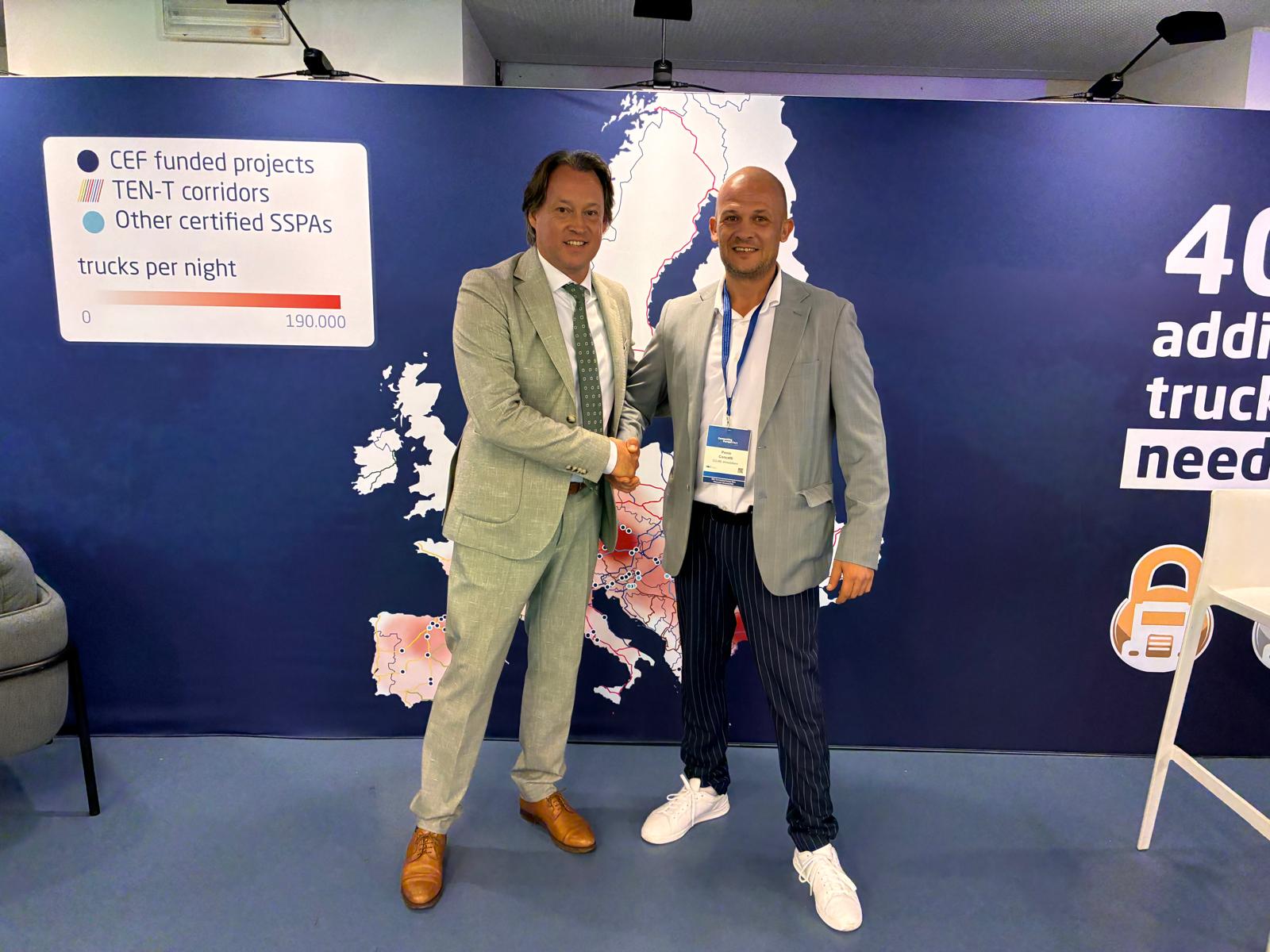
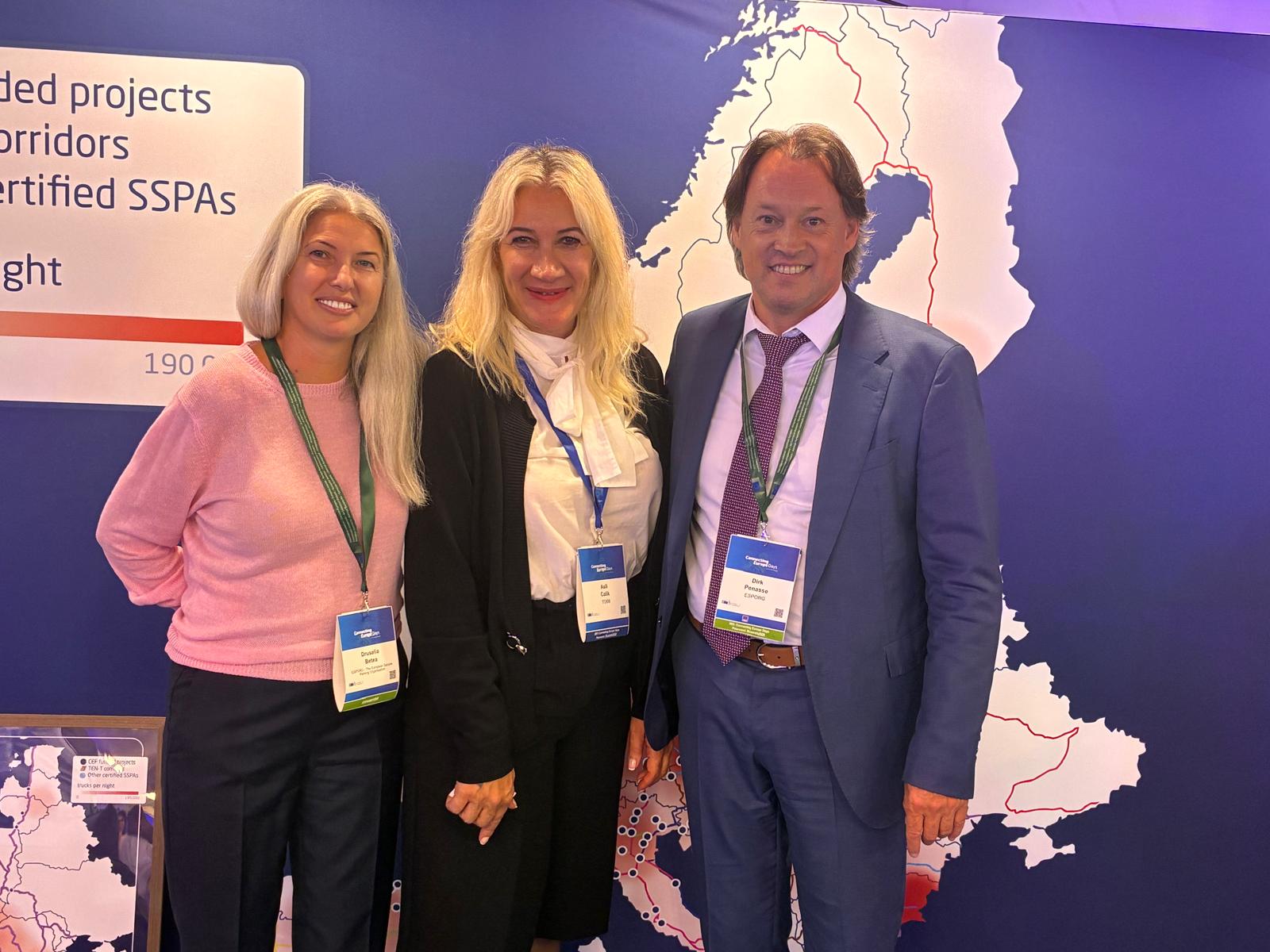
The ESPORG stand served as a meeting point for the organisation’s European network. ESPORG members and partners present during Connecting Europe Days included NECTION, BIDEGI, OnTurtle, MowizTruck, M1 Autohof, Automotive Cluster Bulgaria, Autostrada del Brennero/Brennerautobahn and Calsina Carré.
The event was also an opportunity to expand the network. Among the new partners joining ESPORG are TruckerVerse and CO.RE Immobiliare, bringing additional expertise and connections from the transport and logistics ecosystem.
For ESPORG, Connecting Europe Days 2026 provided a valuable platform for direct exchanges with European institutions and key stakeholders involved in planning, financing, regulating and operating Europe’s transport infrastructure.
.