An exclusive interview with Mathieu Vander Paelt – Director of the Mattheeuws Group and ESPORG Board Member since 2024
Mathieu Vander Paelt looks at secure truck parking from both sides of the road: as a succesul transport operator who is also a truck stop operator.
As Director of Mattheeuws Group, he experiences the daily pressures of running an international transport business: tight margins, demanding delivery schedules, driver shortages, changing customer expectations and a demanding regulatory environment. As the operator of Truck Stop Veurne, he also sees the road from another angle — what happens when drivers reach the end of their working hours and still need to find somewhere safe, clean and practical to stop.
His position on the ESPORG Board adds a wider European dimension. It connects the operational reality of a family transport business with the wider European debate about secure parking capacity, common standards, driver wellbeing and the resilience of cross-border logistics.
For Mathieu Vander Paelt, these subjects cannot be separated. Parking is not an isolated roadside service, but part of the transport operation itself. “It is not just about parking,” he says. “It is about drivers, planning, customers and operational realities.” That conviction has been shaped by years spent working across several sides of the industry — finance, transport, energy, customs and driver services.
From finance to freight
Mathieu Vander Paelt did not begin his career in a transport office or behind the wheel of a truck. He started in banking, where he specialised in credit and gained experience in financial analysis, accountancy and the assessment of company balance sheets. Looking back, he considers that background one of his greatest advantages. Transport is a low-margin industry, but it is also highly capital-intensive. Companies must continuously invest in tractors, trailers, specialised equipment, workshops, property and increasingly sophisticated technologies. “Transport needs a great deal of investment, so we need banks alongside us. Understanding that side of the business has helped me enormously.” That grounding, he says, taught him the discipline of numbers combined with an understanding of people. “It has a lot to do with people,” he says. “We need good drivers, good mechanics, good people in the office — without one of them, it’s not possible anymore. Transport is a sport. It’s not nine to five, it never stops.”
The Mattheeuws Group: A Family Business Building an Integrated Transport Ecosystem
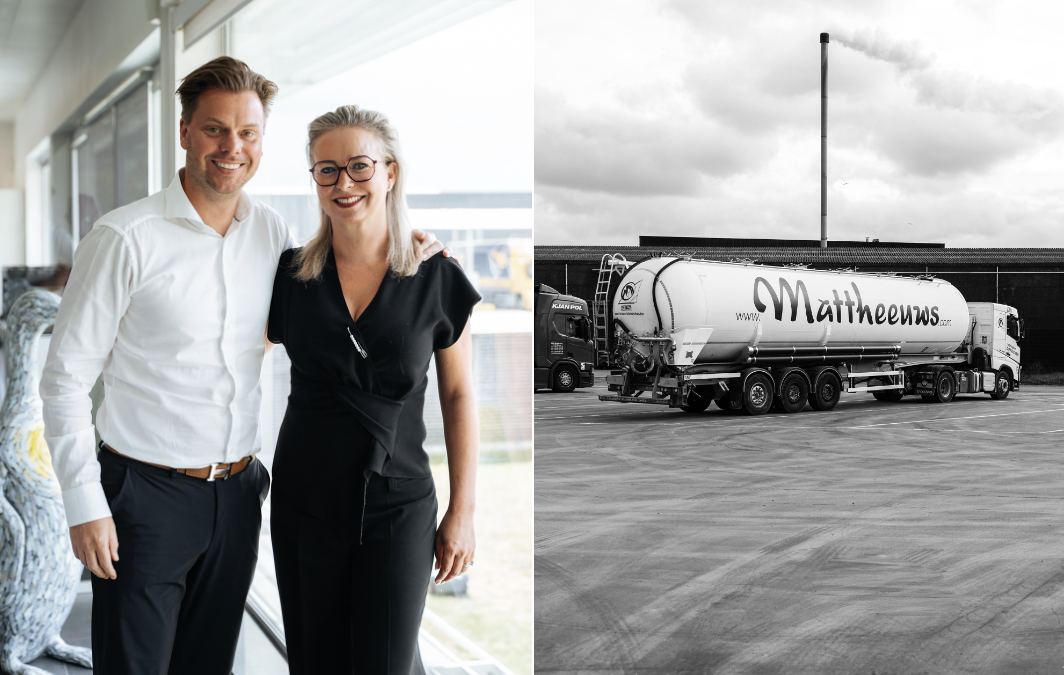
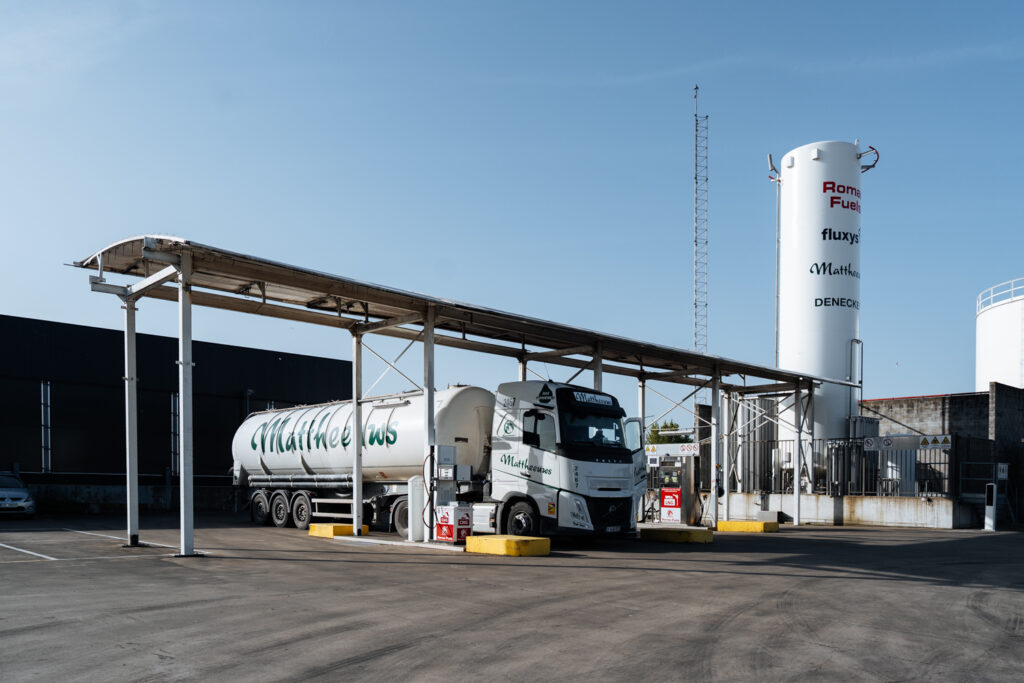
The Mattheeuws Group has a rich history whose roots trace back in 1945. During the decades, the family company continued to grow and innovate, building an integrated transport ecosystem which includes Transport Denecker, Romac Fuels and Truck Stop Veurne. Its activities now combine international transport, specialised industrial and bulk logistics, customs services, energy distribution and Truck parking. “Bit by bit, we are putting all these companies together to have a smooth path for the client.”
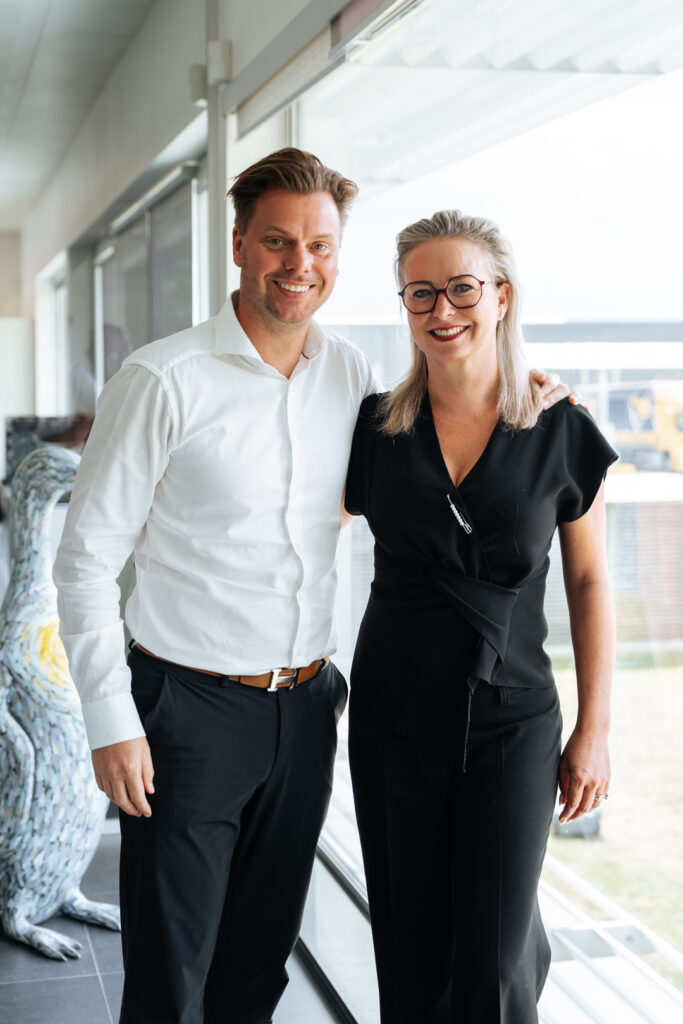
Mathieu Vander Paelt and Celine Mattheeuws, Directors of Mattheeuws Group, a family-owned business.
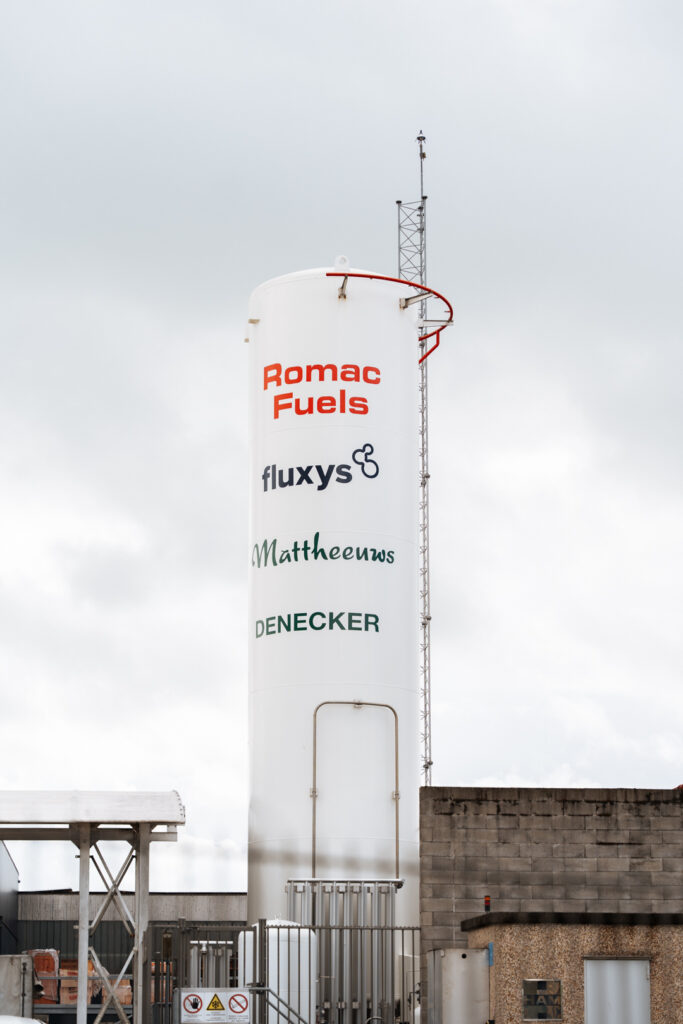
The group also serves customers with production sites across several countries. Materials may need to move between factories in Poland, Spain, Germany, the United Kingdom or elsewhere in Europe, making cross-border coordination part of the daily business. “It’s always evolving, because we need to follow our customers. Transport never stops — it’s not linked anymore to borders. I believe it’s going to get even bigger, because flows are coming from other countries now too. And I believe the same is true for parking: it has to be broader than the boundaries of individual countries.”
Truck Stop Veurne: from Stopping Place to Service Hub
Parking, fuel and driver services increasingly sit under one roof at the Mattheeuws Group’s own truck stop — and Mathieu Vander Paelt describes its evolution as a case study in listening to what drivers actually need. What began years ago as a small shop serving drivers travelling towards the United Kingdom has grown into a developed service area, complete with a cleaning station for trucks and clothes, and a shop offering food and drinks familiar for the nationalities that pass through. “A Romanian driver can find Romanian products, a Polish driver can find Polish products. They are away from home for many weeks, so we try to give them something familiar” he explains.
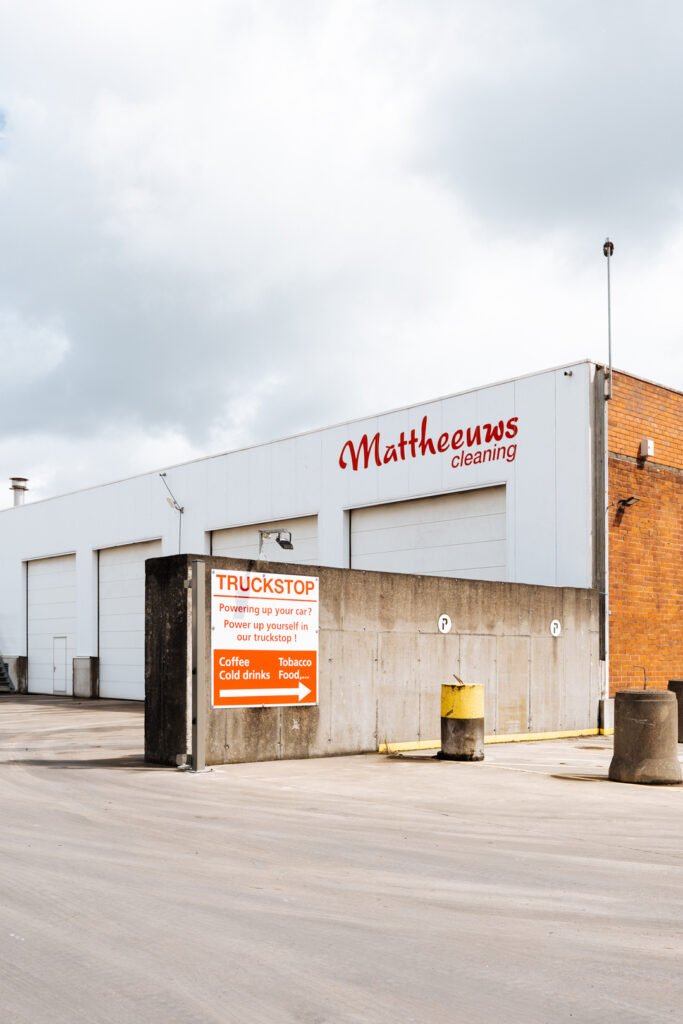
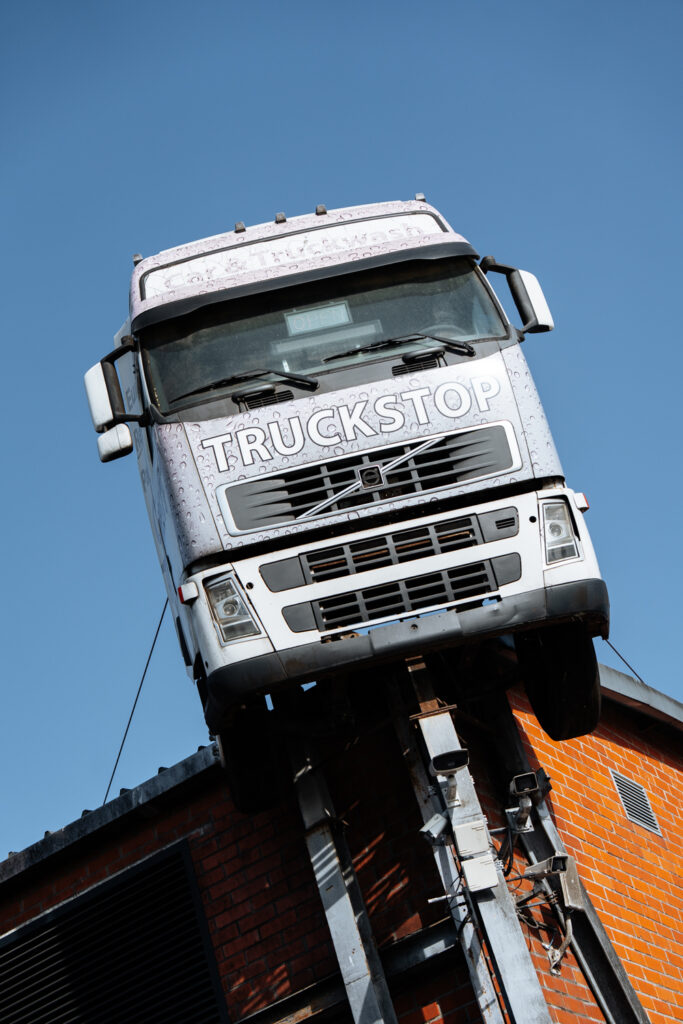
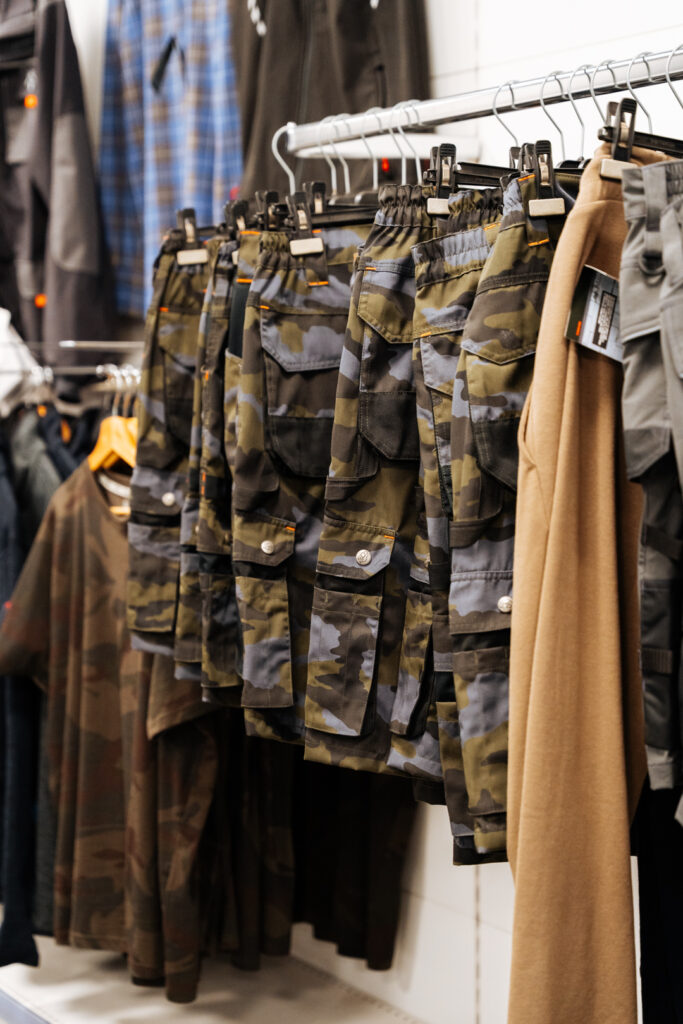
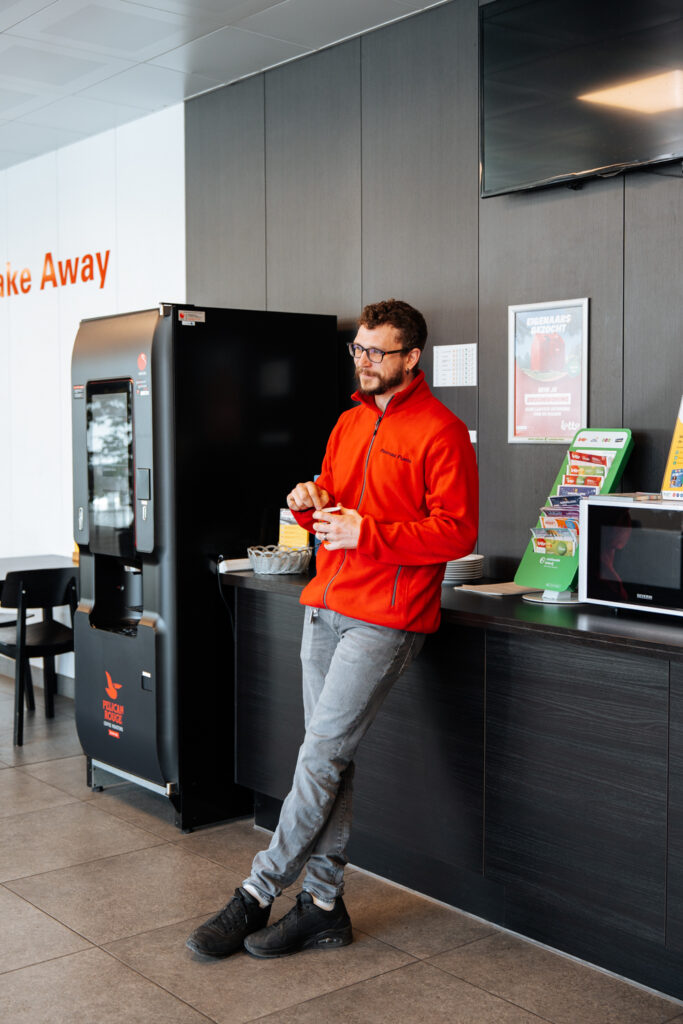
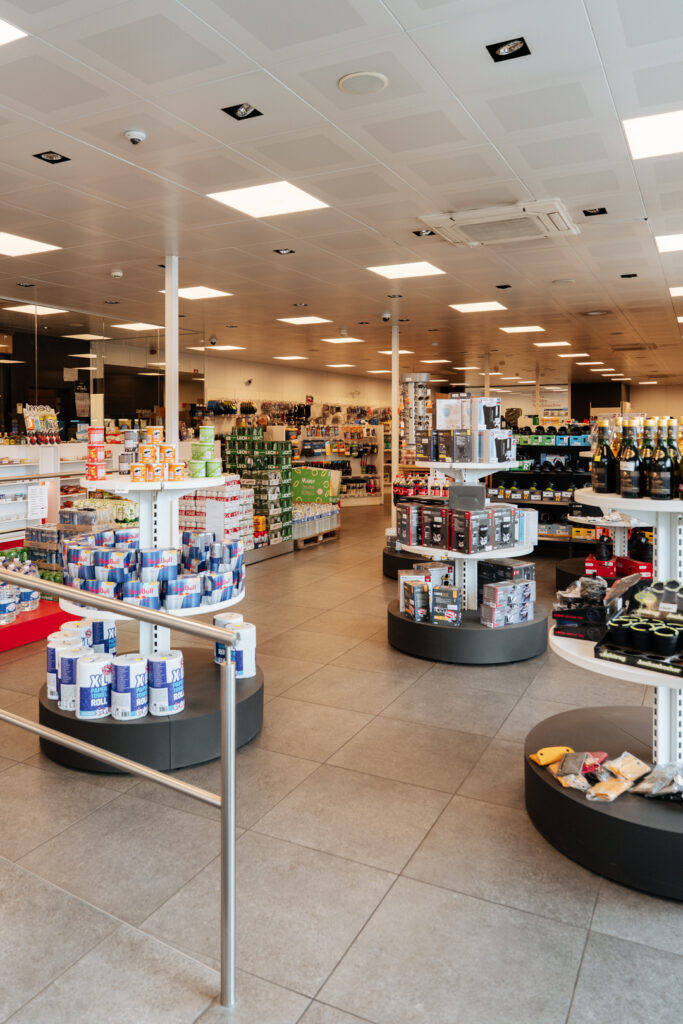
The ambition goes further: he wants the site to become a small community where a driver can find everything he needs, from basic maintenance tools to a choice of fuels — diesel, HVO, bio-LNG and now electricity. “I am a strong believer in alternative fuels, but I do not believe in one fuel,” he says. “One solution may be suitable for local transport, while international transport needs something else.”
That open approach also applies to driver services. Not every driver needs the same thing. Some remain overnight, some take weekend breaks and others stop only for fuel, coffee or a meal. The ambition is therefore to create a flexible service hub rather than impose a single model. Mathieu Vander Paelt describes his longer-term vision as building “a small community”: a place where drivers can talk, relax or play a game of pool after spending much of the day alone.
“Drivers spend a great deal of time by themselves,” he says. “Sometimes they simply want contact with other people.”
Driver Shortage — or Shortage of Attractive Jobs?
The conversation about parking cannot be separated from Europe’s shortage of professional drivers. Mattheeuws Director sees it as one of the most serious structural risks facing the transport industry. The current economic slowdown may have temporarily reduced demand in parts of the market, but a stronger recovery could expose the shortage very quickly.
Experienced drivers are retiring, while too few young people are entering the profession.“The biggest issue is not only pricing,” he says. “The biggest issue is that we do not find enough people who want to do the job.” The industry must nevertheless take responsibility for making the profession more attractive. Parking conditions therefore become part of recruitment and retention. They demonstrate whether the sector genuinely values the people on whom it depends.
For Mathieu Vander Paelt, making the profession attractive again means restoring its dignity. “We need to bring back the quality — Drivers are the captains who deliver the goods we eat every day. The world needs to be more grateful to drivers— because without them, as we saw during Covid, nothing happens. The world stops.”
The Mobility Package and related social rules have raised legitimate expectations about rest and working conditions. Infrastructure has not kept pace. “We have laws written five years ago and we are still discussing the same parking shortage” Vander Paelt observes. He is direct about where he thinks priorities should sit. “We’ve said for years that parkings are not okay— but we don’t push hard enough to fix it. We pay enormous amounts in tolls; secure parking capacity should be higher on the priority list.”
What Hauliers Need from Parking
Having sat on both sides of the road — as a transport operator buying parking services, and as a parking operator himself — Vander Paelt is blunt about the economics. “For fleet operators, it always comes down to pricing,” he says. “Everybody wants the best quality for the best price, because transport is a low-margin business. “ But there is also the higher cost of insecurity. Cargo theft is rising, and insurers are becoming more selective about the conditions under which certain goods are covered. For some loads, secure parking is already an insurance requirement: “We’re already obliged on some loads to use secure parking — if not, insurers say they simply can’t insure us anymore, because thefts are increasing every year.”
Damage associated with migrant intrusion creates an additional risk. Vander Paelt notes that some forms of damage are no longer covered under standard insurance conditions in Belgium, leaving operators to absorb the loss.
Military Mobility: a New Agenda for the EU
Europe’s changing security environment is adding another dimension to the parking debate. Military mobility may require infrastructure capable of accommodating heavy vehicles, abnormal convoys, dangerous goods and loads with different dimensions and weights from ordinary commercial traffic. Mathieu Vander Paelt welcomes the emerging dialogue between ESPORG, the European Commission and NATO because it brings technical and operational expertise into the same discussion.“The right people are sitting together,” he says. “They can connect military requirements with parking standards and include those needs in new plans.”
Looking Beyond 2030
Asked to picture secure parking a decade from now, Mathieu Vander Paelt expects automation to reshape parts of the network — but not to replace the human element at its core. “I think we’ll have automated trucks running depot to depot, but we’ll still need transport with drivers, because not everything can run on autonomous vehicles. The parking space is going to adapt, is going to change with new standards – but it remain a hub for drivers who share the same professional reality to meet, rest and recover.”